
Popular Hanging Succulent Plants
If you are someone who has always been partial to hanging baskets, yet you like succulents, you might be wondering “What are my choices?”. There are plenty of succulent plants that hang down that are perfect for hanging baskets.
Some succulents are best being allowed to grow tall or straight out of a pot. However, there are many types of unusual succulents that enjoy growing in a hanging pot so they can stream down as each new piece starts.
String of Pearls
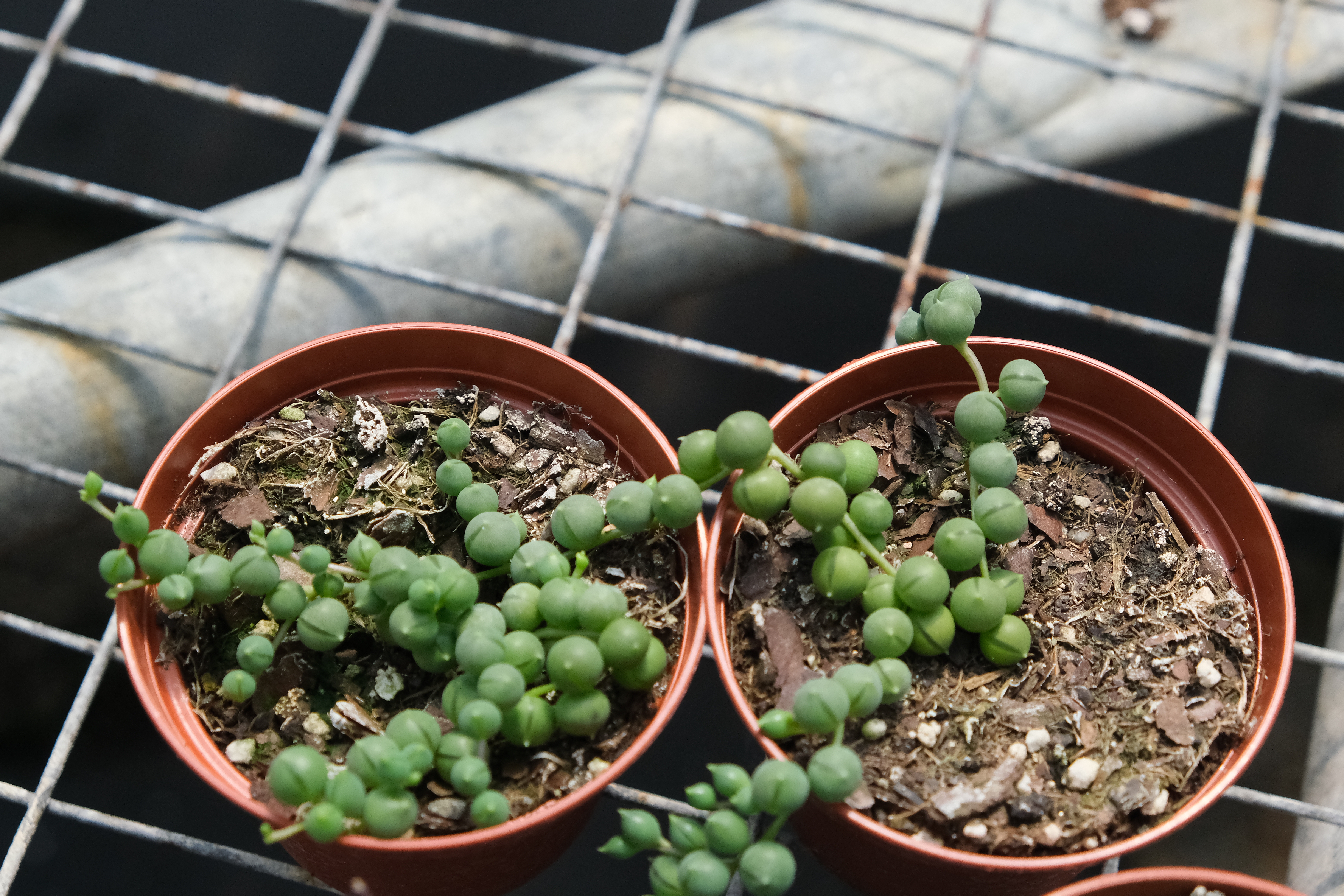
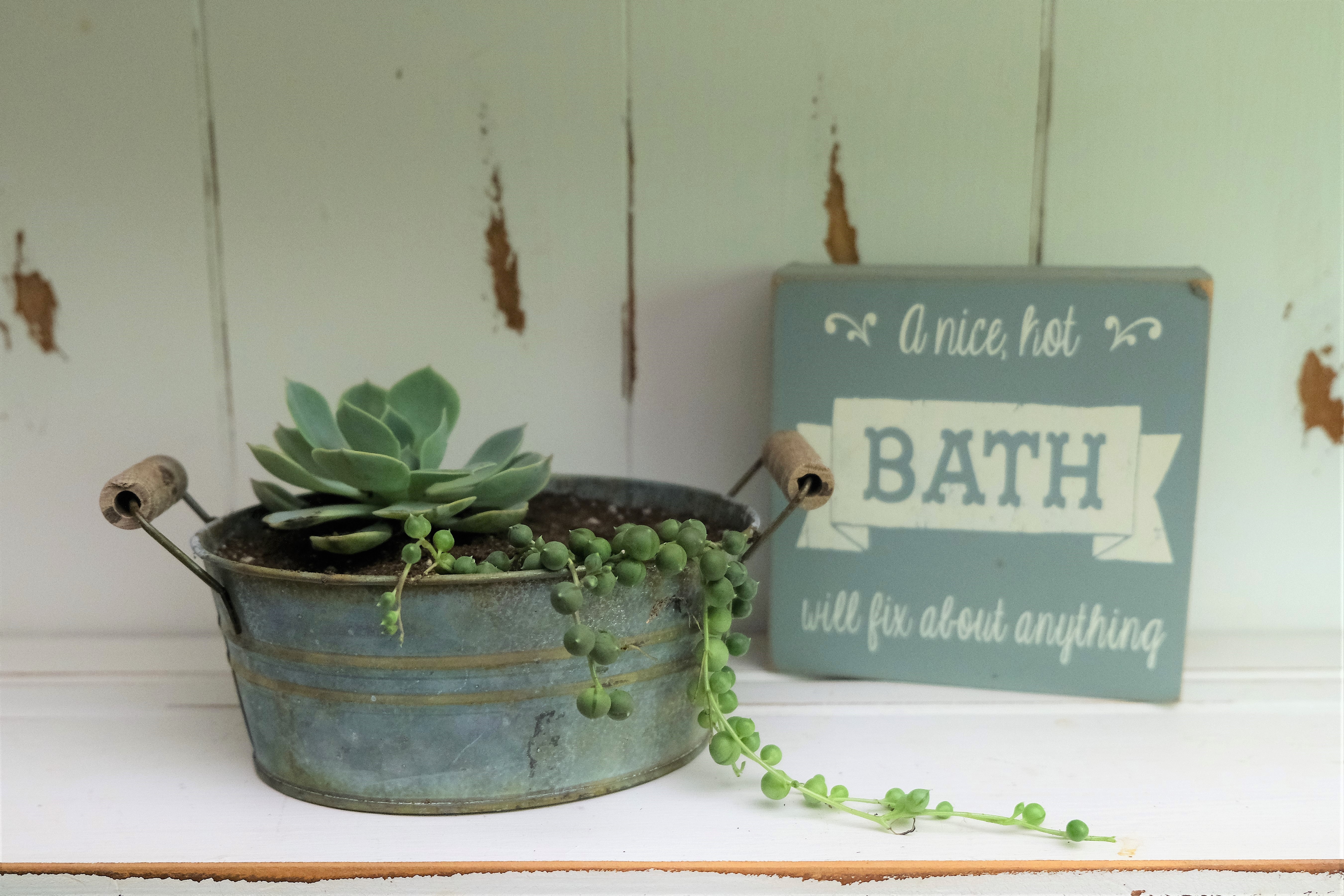
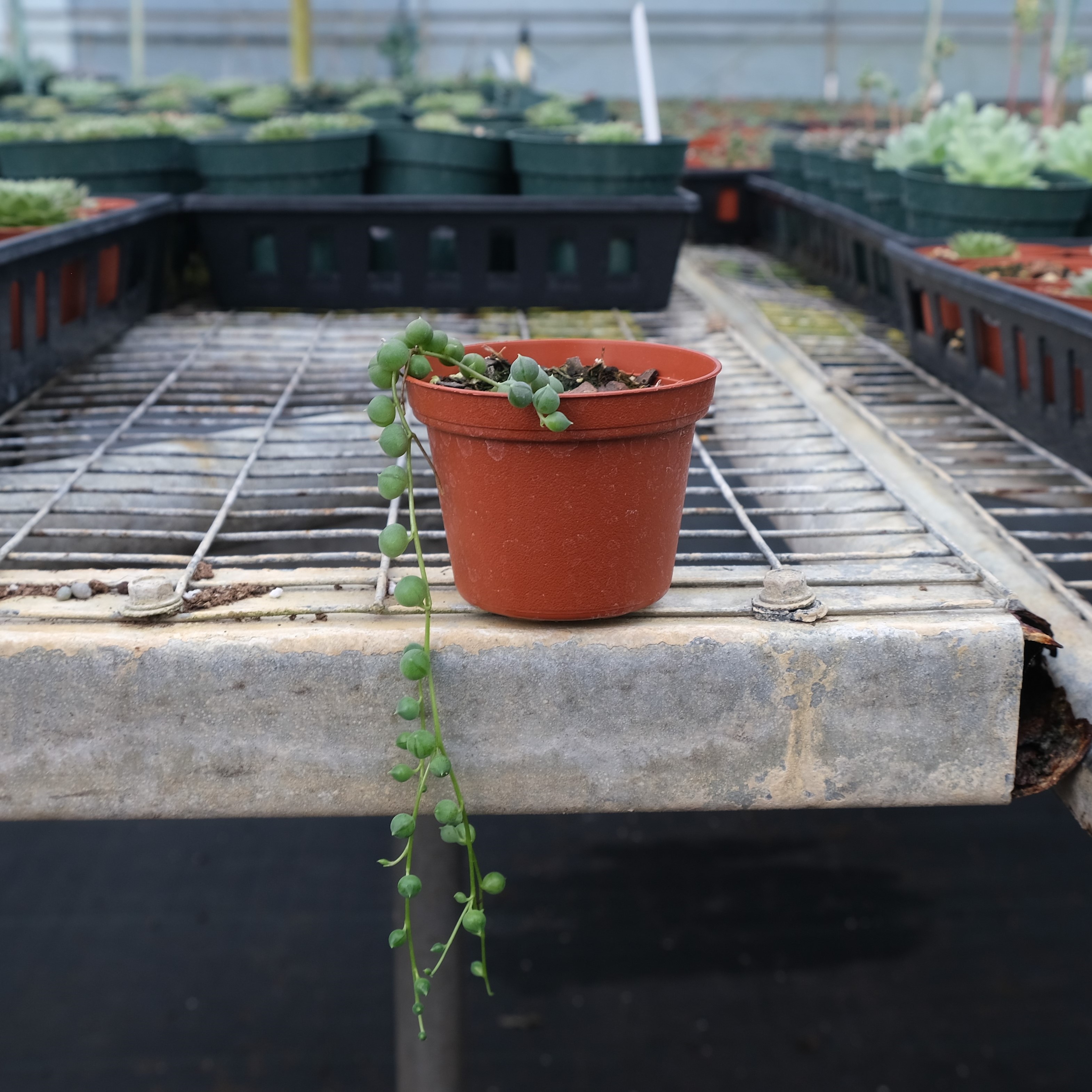
This easy-care, succulent plant resembles a beaded necklace with its fleshy green, pea-like foliage and looks great in hanging baskets. The String of Pearls is a beautiful hanging succulent that usually steals the show in any arrangement you put it in, but look best in hanging baskets.
- Loves bright light but no direct sunlight
- Hardiness: Zones 10, 11
Donkey’s Tail
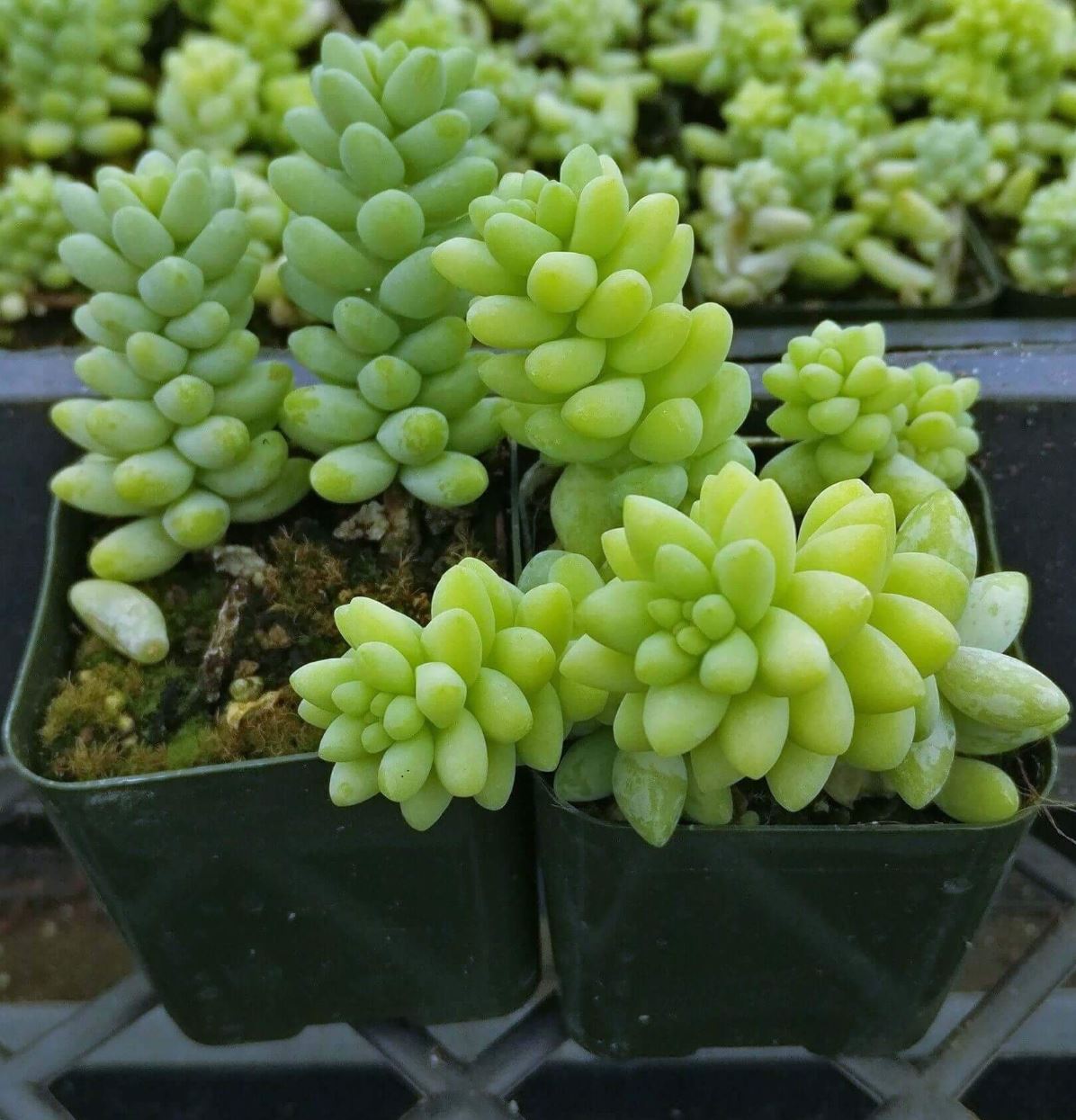
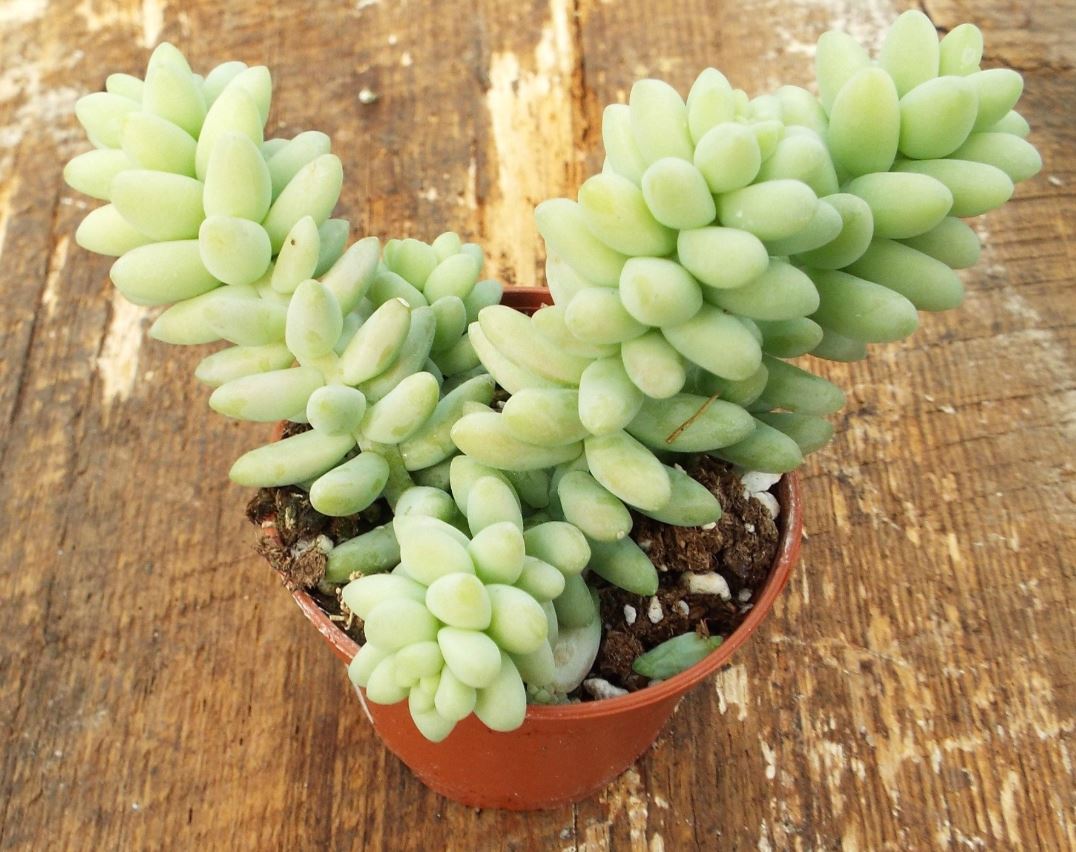
One of the prettiest Sedums, this is one of those unusual succulents that grows and has pendant stems that tend to cascade down over the edges of the basket. The foliage is short and very light green. Hanging succulent plants are a easy grow, and the Donkey’s Tail is no exception.
- Loves full sun
- Hardiness Zone 10b, 11
Echeveria Varieties
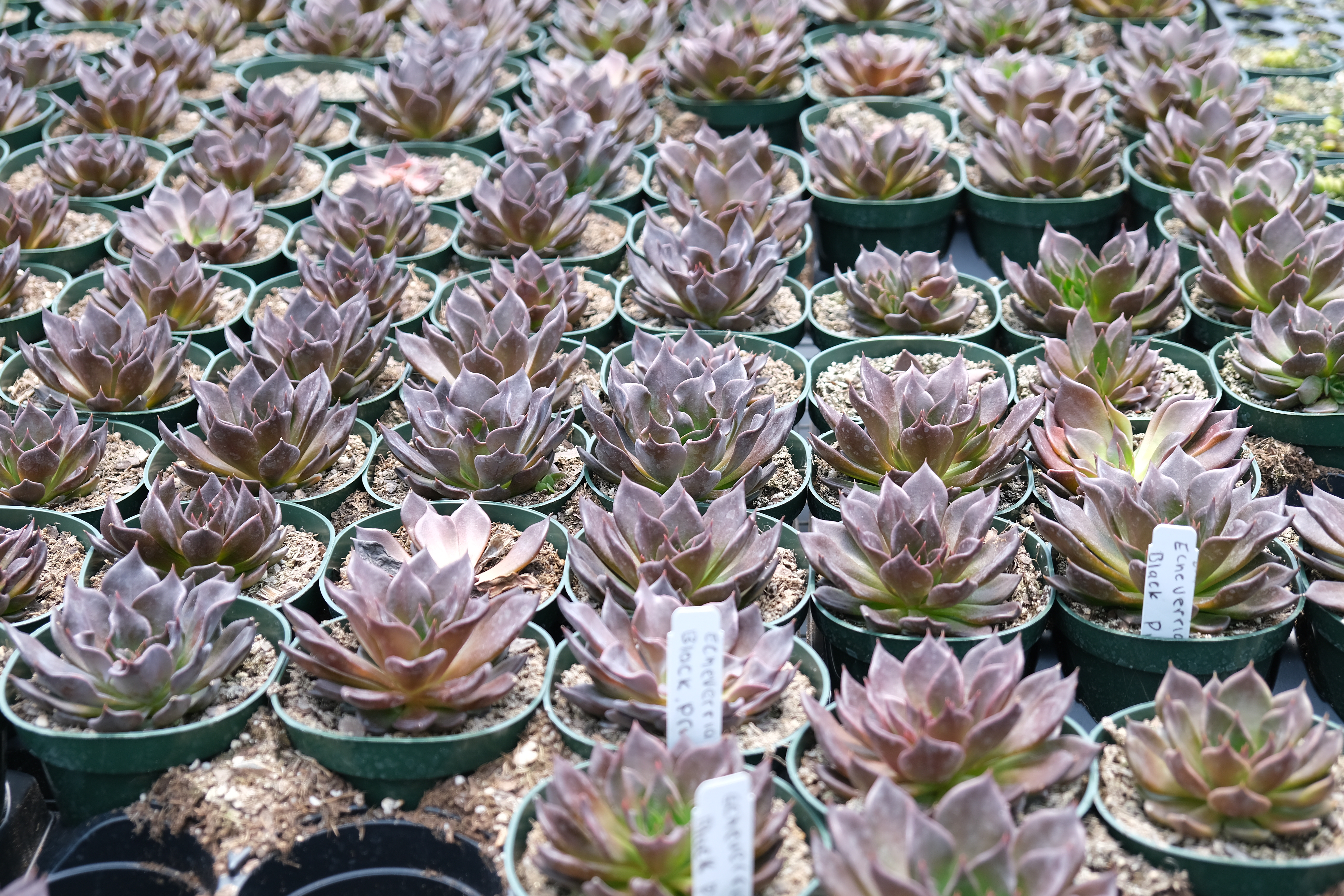
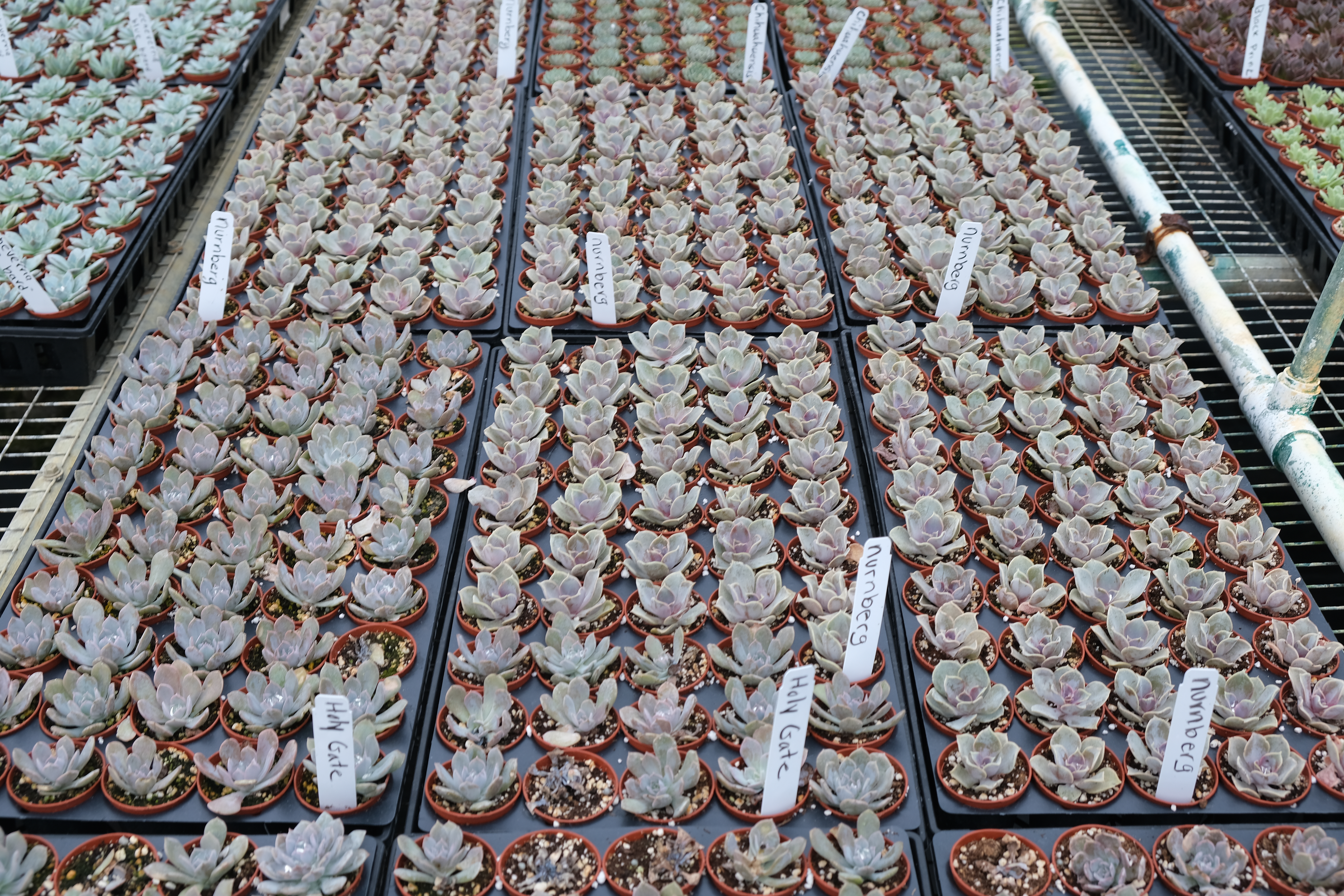
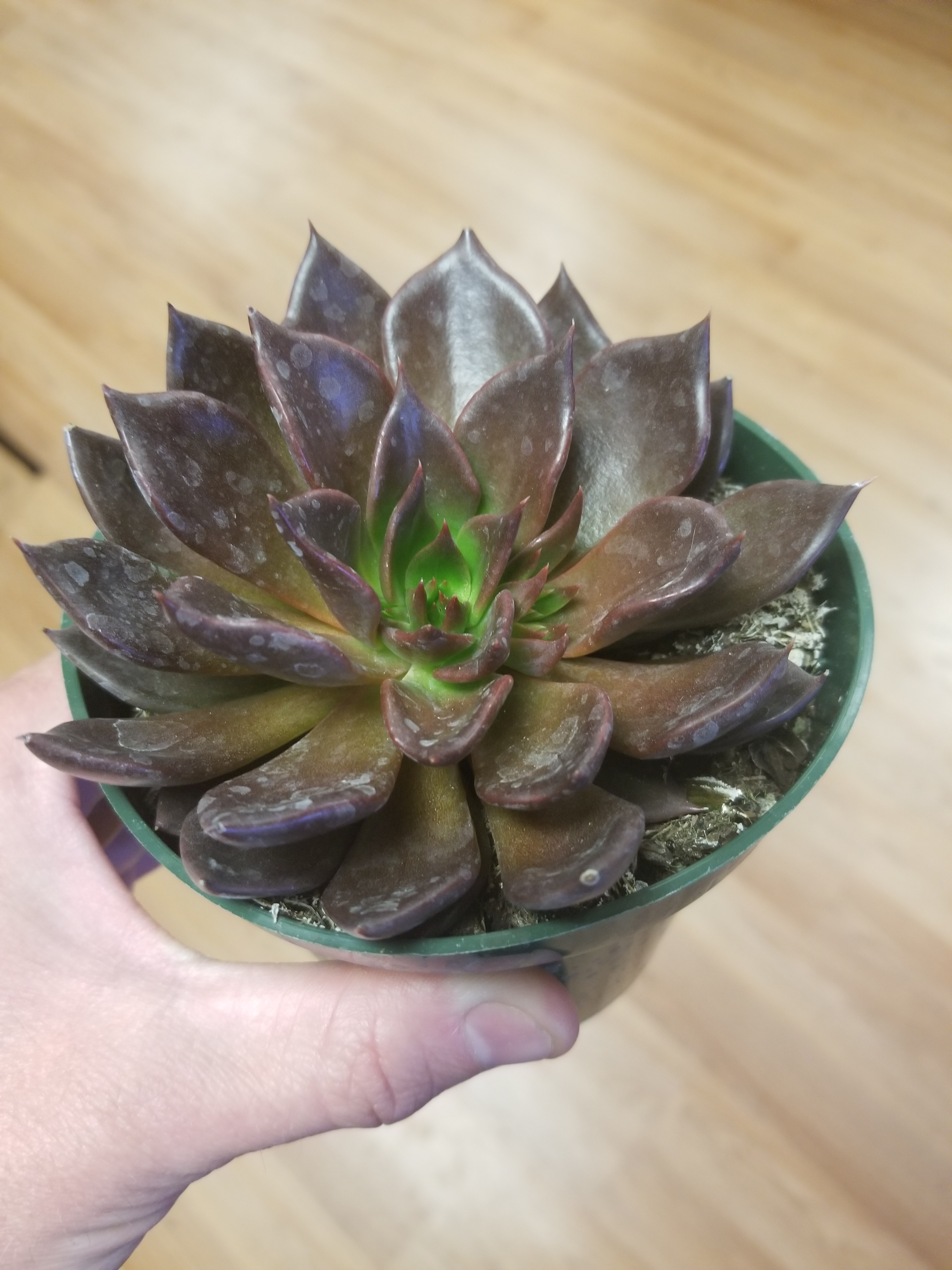
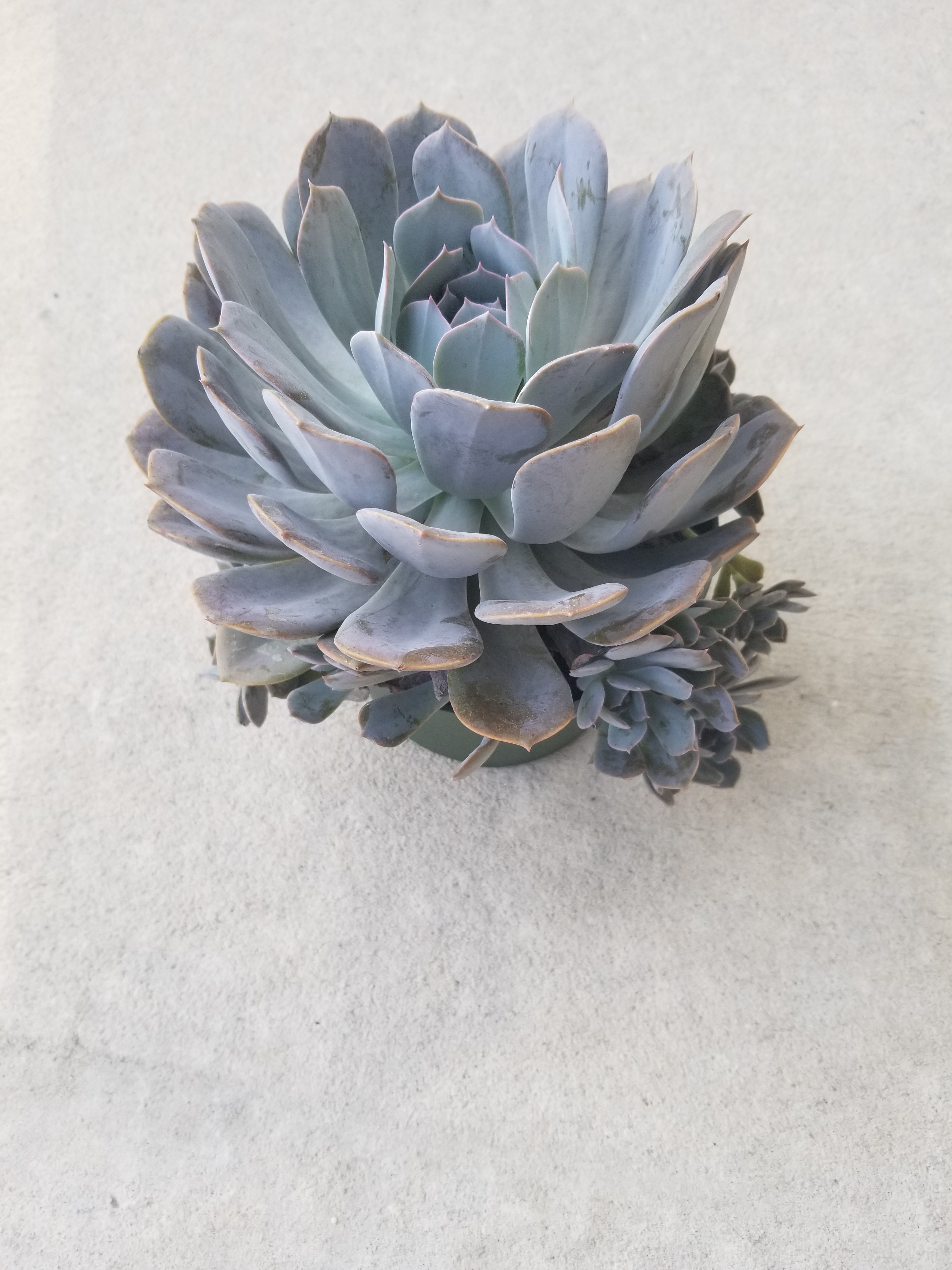
Echeveria is a large genus of succulent plants in the Crassulaceae family, native to semi-desert areas of Central America. Most of the common Echeveria species are not complicated succulents to grow, provided you follow a few basic rules. First, be careful never to let water sit in the rosette as it can cause rot or fungal diseases that will kill the plant. Additionally, remove dead leaves from the bottom of the plant as it grows. These dead leaves provide a haven for pests and Echeverias are susceptible to mealy bugs. As with all succulents, careful watering habits and plenty of light will help ensure success. Source: worldofsucculents
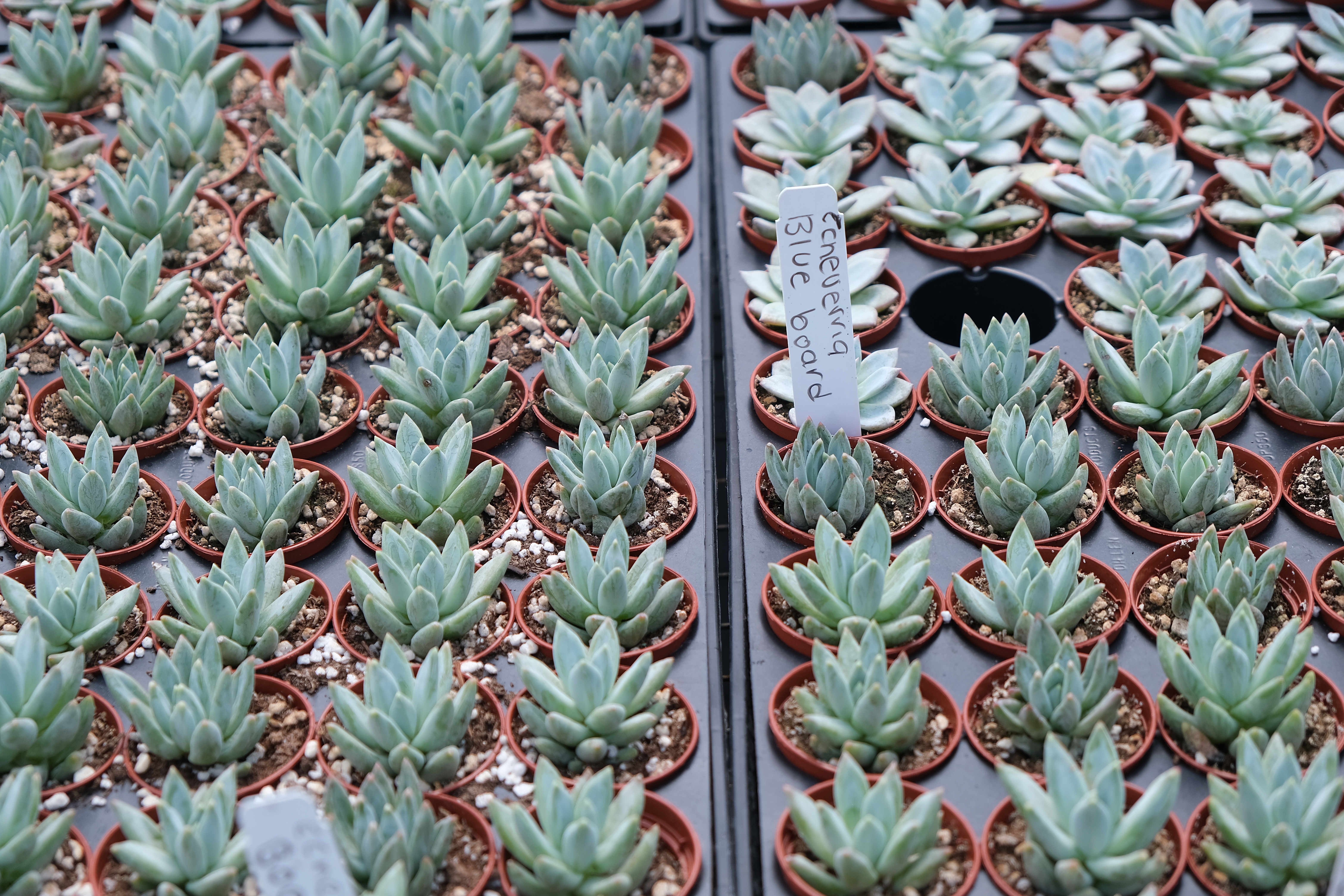
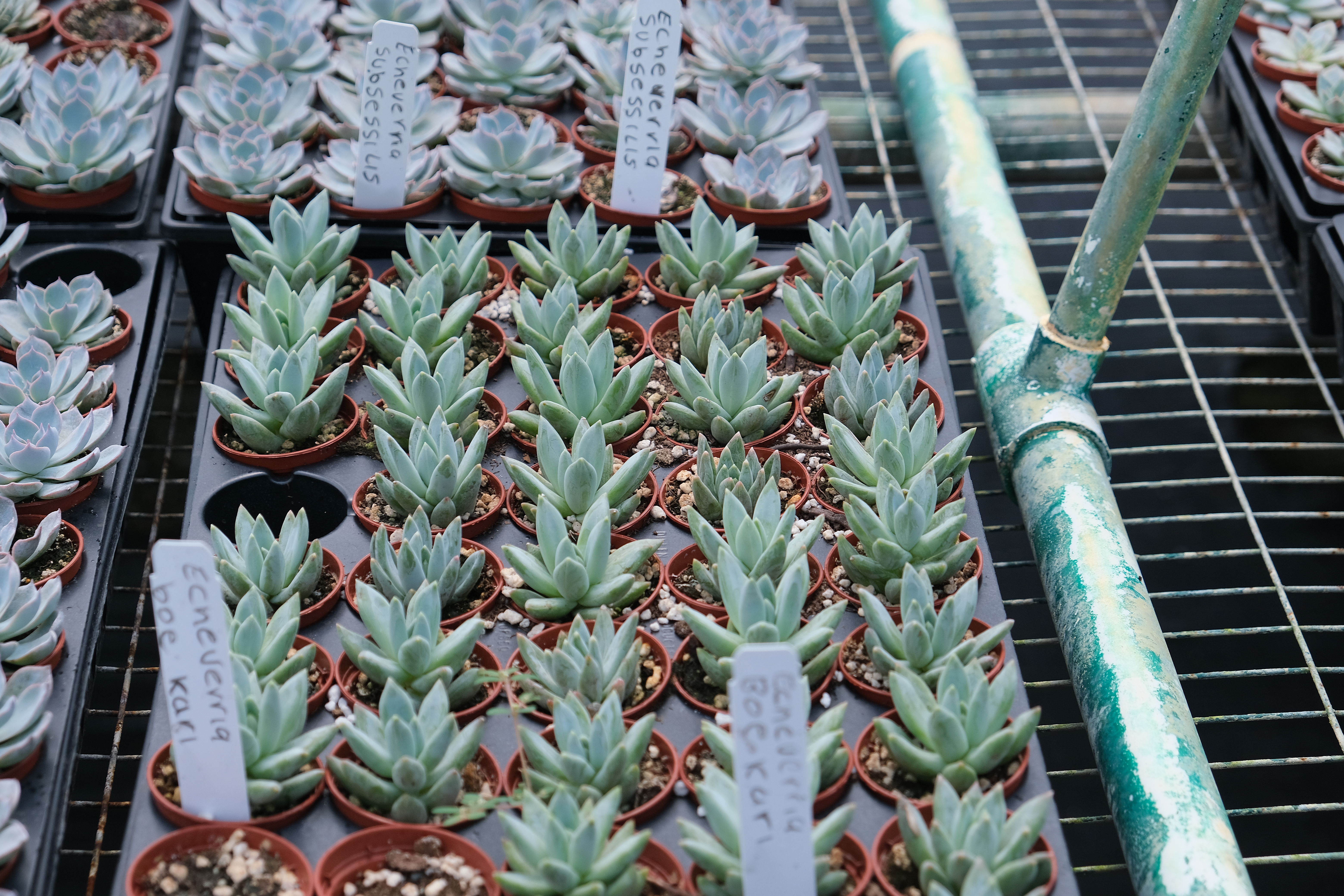
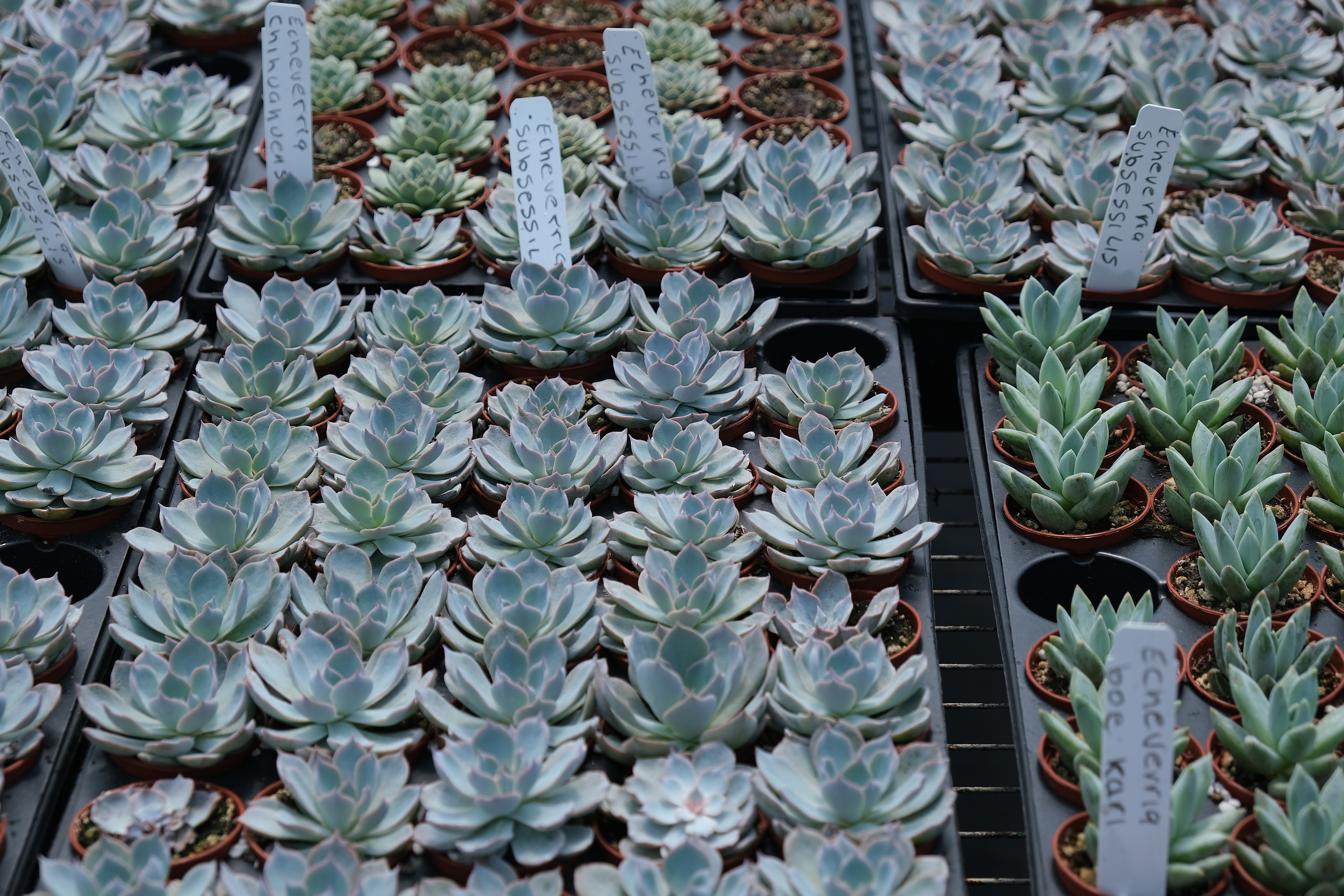
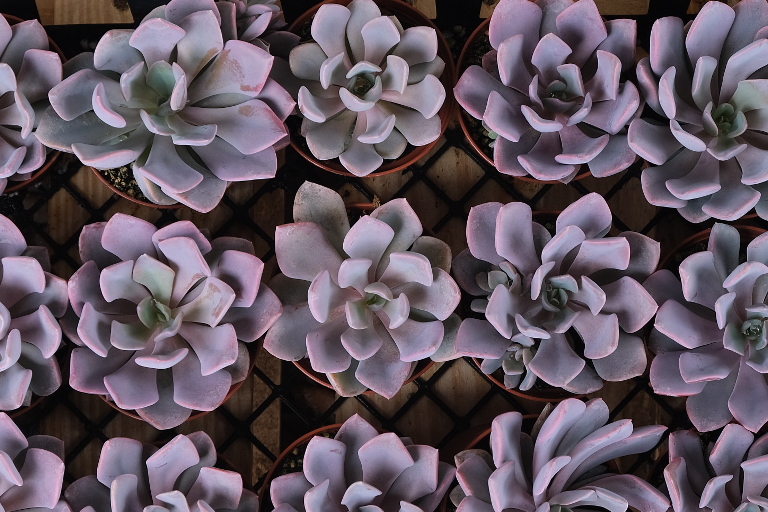
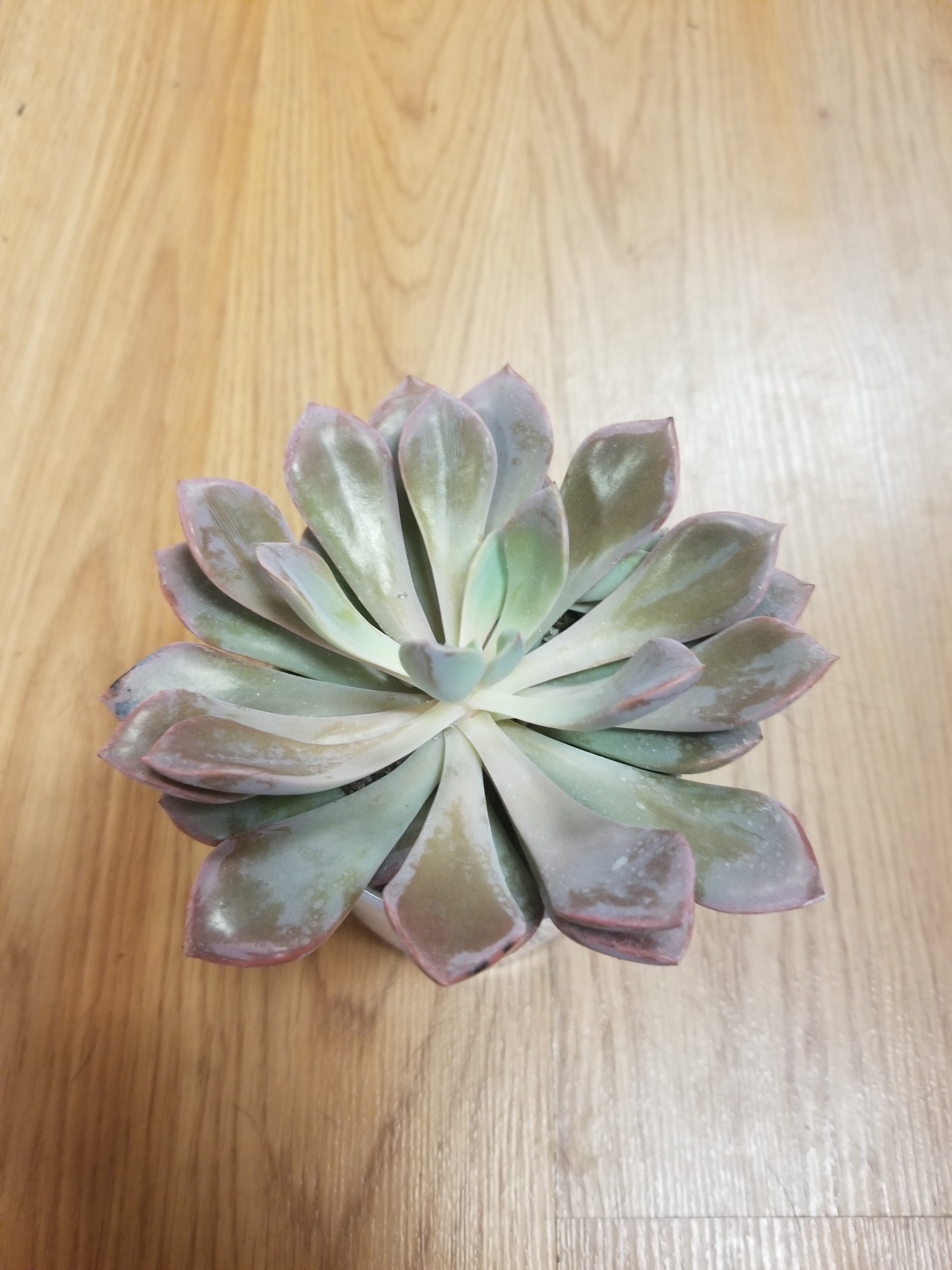

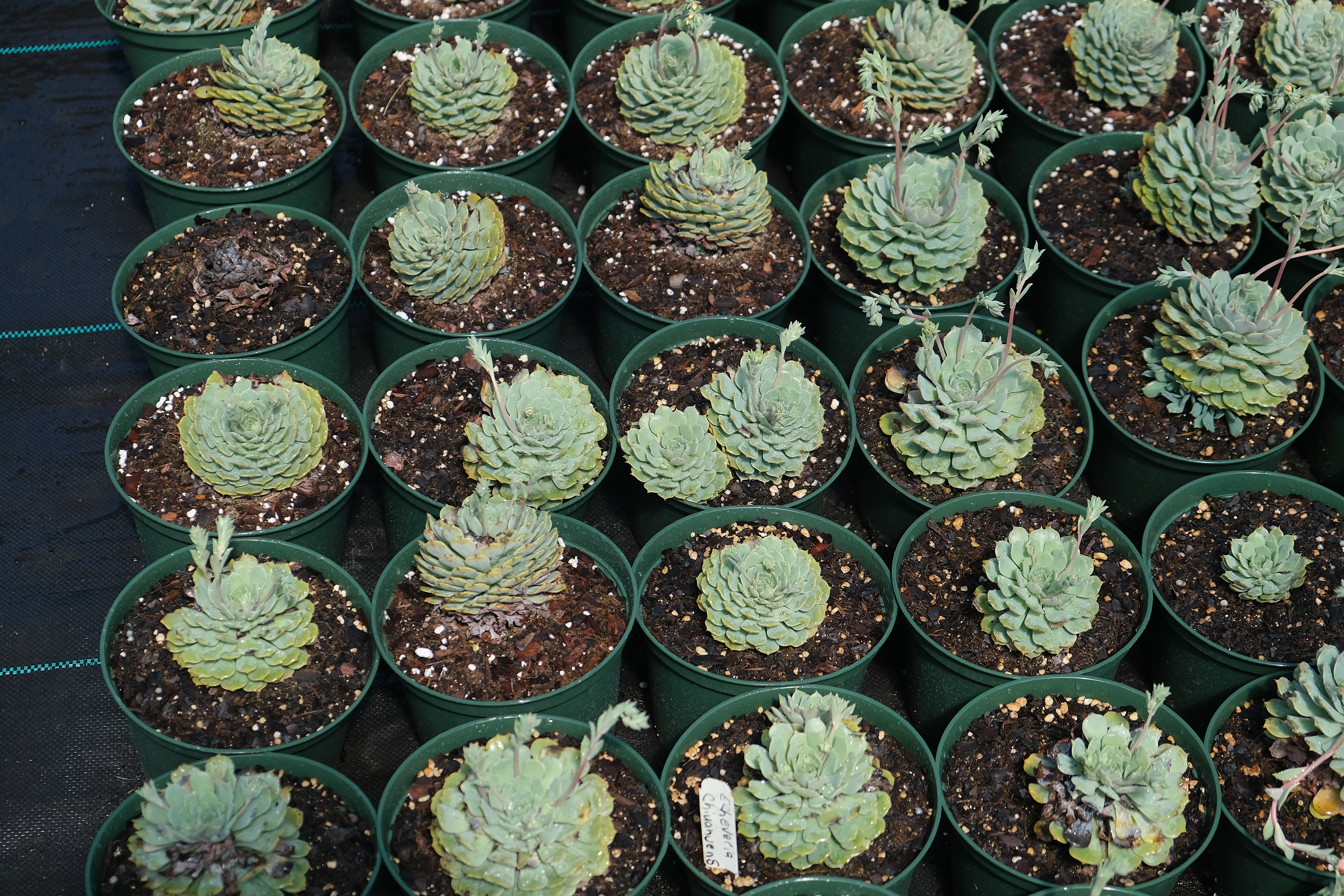
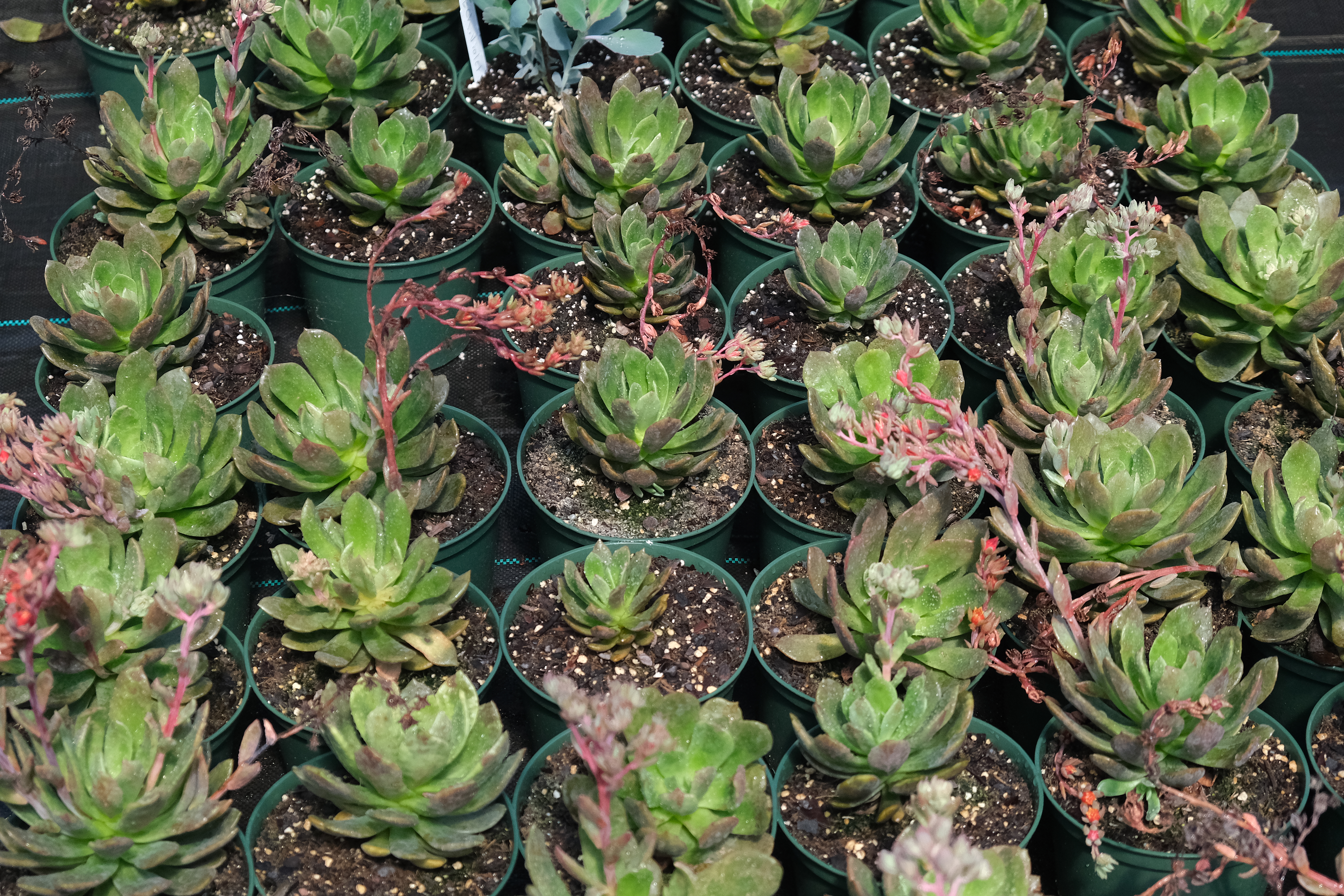
- Full sun. Perfect for a sunny window.
- Hardiness Zone 9, 9b, 10, 11, 12 Prefers average summer temps.
- Water during the summer and spring, making sure drainage is immaculate. Reduce water in the winter to monthly.
Echeveria Varieties
- Echeveria Hybrid Black Prince
- Echeveria Hybrid Chihuahuensis
- Echeveria Hybrid Deranosa
- Echeveria Hybrid Graptoveria Debbie
- Echeveria Hybrid Holy gate
- Echeveria Hybrid Imbricata
- Echeveria Hybrid Perle Von Nurnberg
- Echeveria Hyrbid Secunda
- Echeveria Hybrid Violet Queen
- Echeveria Hybrid Agavoides Red Tip
- Echeveria Hybrid Blue bird
- Echeveria Hybrid boi Kari
- Echeveria Hybrid Subsessilis
- Echeveria Hybrid Fred Ives
Lampranthus Blandus-Pink
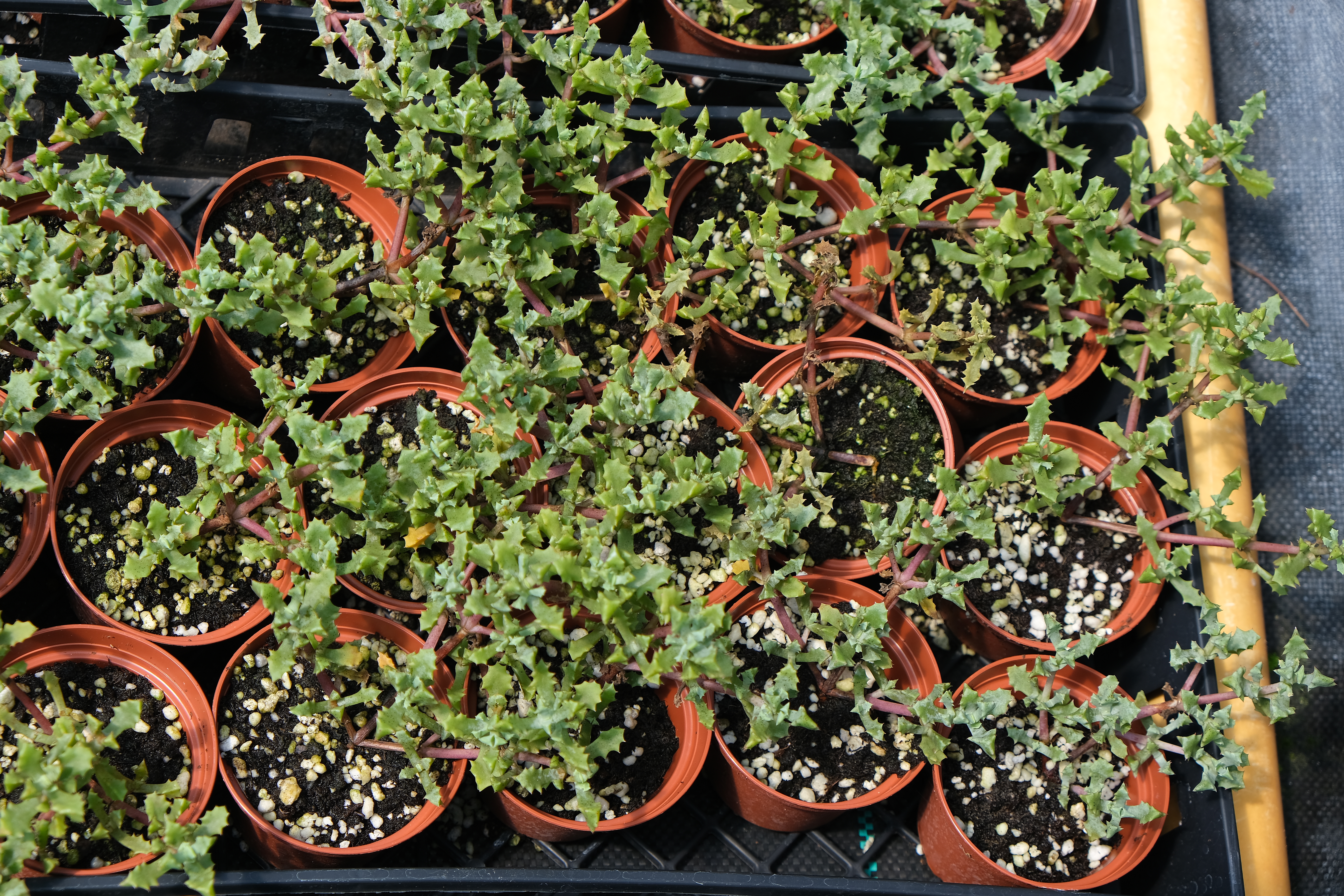
Lampranthus blandus is a succulent, perennial shrub. In nature, the shrub will reach up to 2 feet (60 cm) tall. In containers, they only get up to 18 inches (45 cm) tall. The gray-green leaves are equally 3-sided, elongating up to 2 inches (5 cm), with translucent dots. It is a free bloomer, if given lots of sun and heat in the summer. The plant can literally be covered in pale pink flowers all summer long. Source:World of Succulents
- Hardiness zone 8-11
- Can tolerate coastal conditions
- blooms
Semper Vivum Jade Rose
This is a succulent perennial with striking, jewel-toned rosettes of light green and purple leaves. They are often green in the center and on the outer edges and deep reddish-brown in the middle. Larger rosettes reach up to 5 inches (12.5 cm) in diameter, producing smaller rosettes to form a dense, handsome colony. Source : World of Succulents
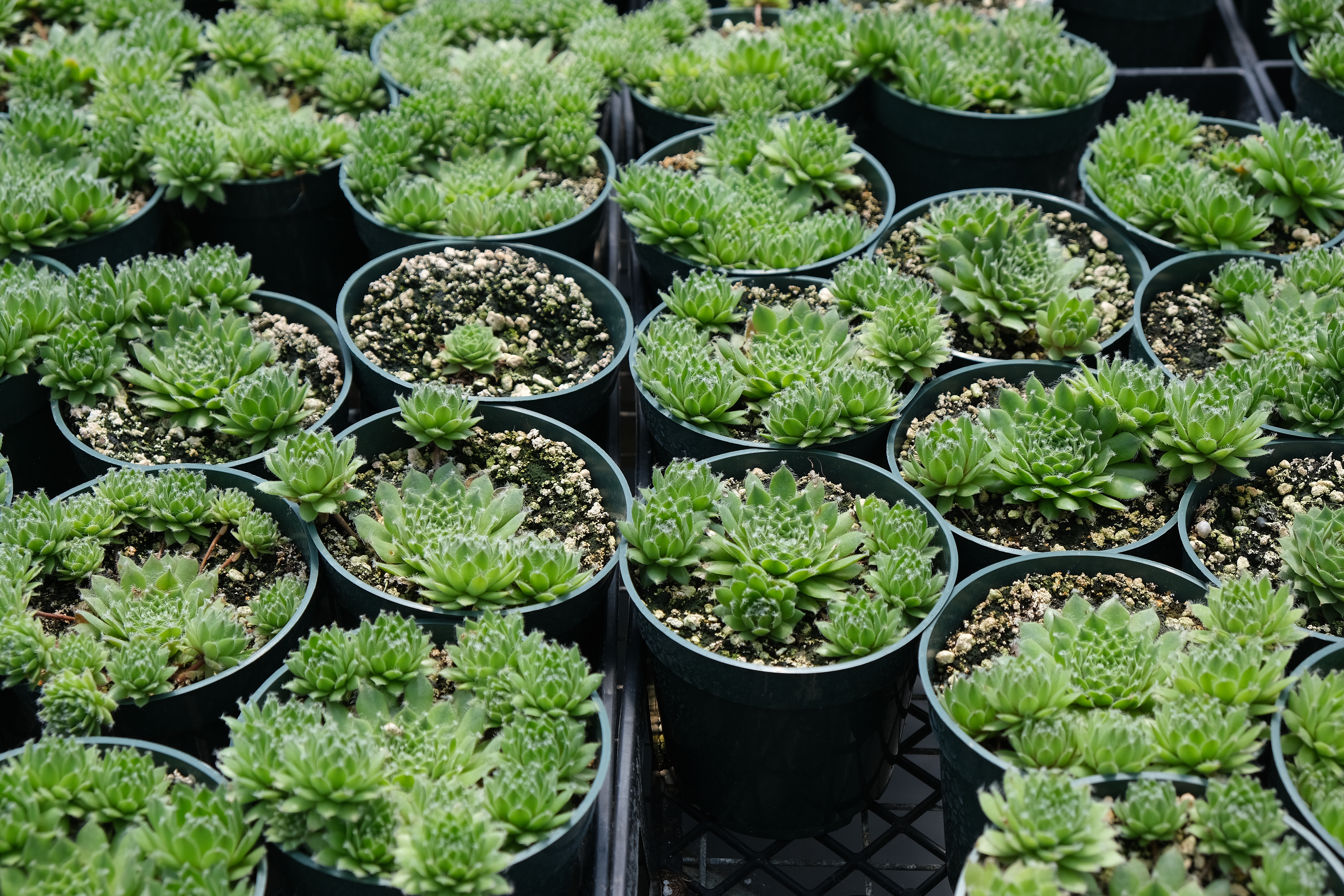
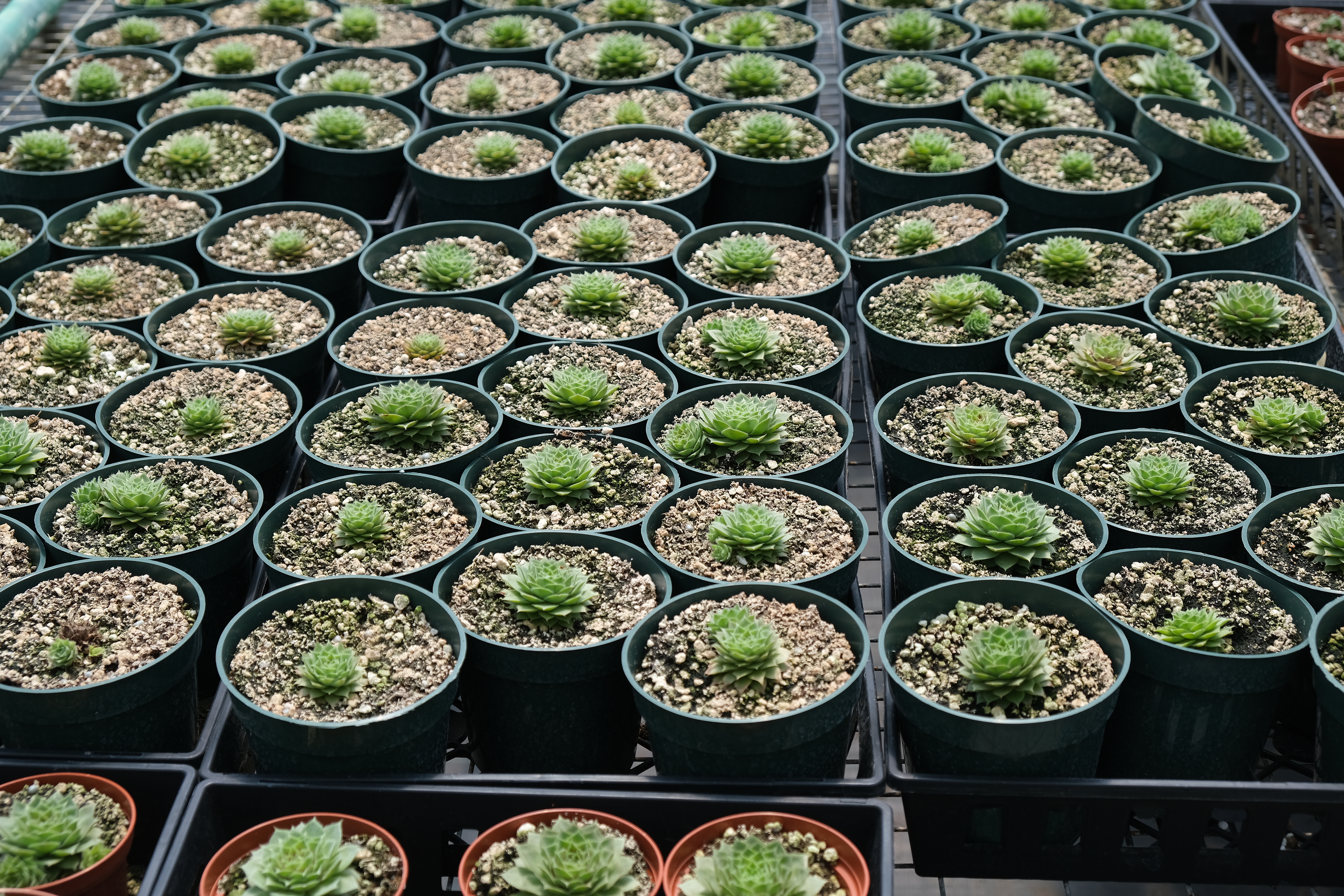
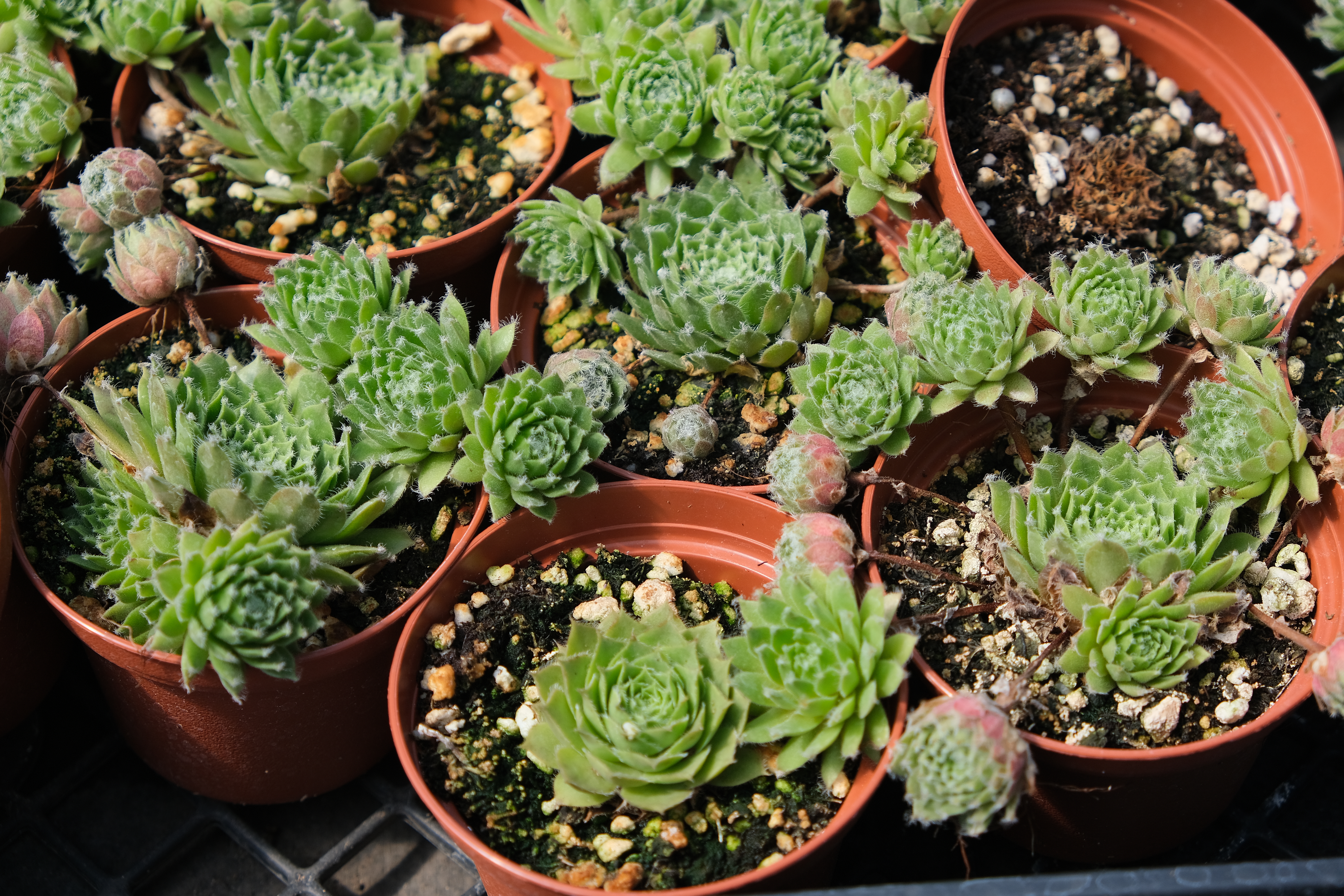
- Nickname is “Hen and Chicks”
- Good for a cold window
- Do not excess water
- Hardy zone 4A-10A
Graptoveria “Fred Ives”
Graptoveria ‘Fred Ives’ is a beautiful and durable succulent plant that produces large clumps of rosettes up to 8 inches (20 cm) tall and up to 1 foot (30 cm) wide. The succulent leaves are broad, waxy pearly-bronze to purplish yellow-orange to blue green (depending on time of year and growing conditions). Flowers are pale yellow with red-orange center and appear in summer on up to 2 feet (60 cm) long arching stems. Source: World of succulents
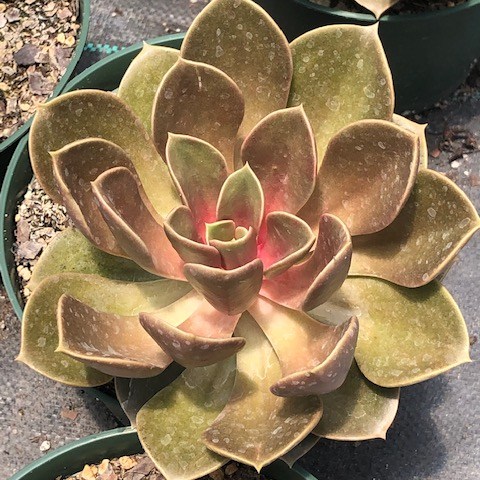
- full sun, will grow in partial shade, but prefers sun
- If leaves are shriveled you need to water
- Hardy zone 9a to 11b
Crassula “blue bird”
Crassula ‘Blue Bird’ was introduced and described by Dr. B.K Boom in the Dutch journal Succulenta in 1963 as Crassula portulacea ‘Blauwe Vogel’ (which translates to “blue bird”) and was long thought to be a hybrid of Crassula ovata and Crassula arborescens. After Toelken had received leaves and inflorescences of this supposed hybrid he explained that it is identical with the plant he had described as Crassula arborescens subsp. undulatifolia. This means Crassula ‘Blue Bird’ is the same as Crassula arborescens ssp. undulatifolia, subspecies with 2 somewhat different forms in cultivation . Source: world of succulents
- Hardy zone 9b-11b
- susceptible to mealy bugs and fungus
- too dry is better than too wet\
Crassula rupestris subsp. marnieriana ‘Contorta’
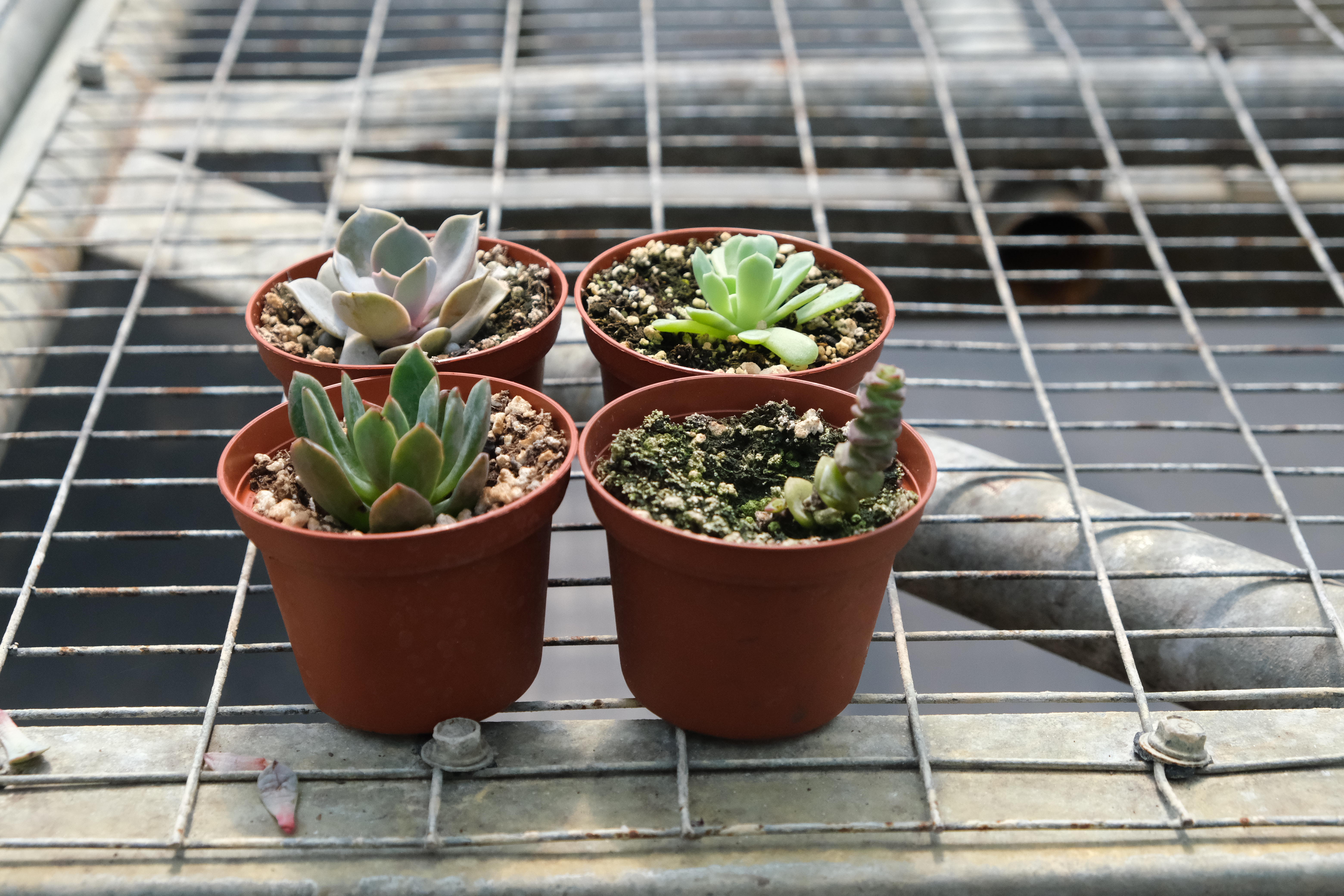
Crassula rupestris subsp. marnieriana ‘Contorta’ is a cultivar of Crassula rupestris subsp. marnieriana with semi-erect or decumbent, rooting stems, thickly covered with leaves, reaching a height of up to 8 inches (20 cm). These stems are not linear cylindrical like in the standard type but variously twisted, bent and gnarled. Source: World of succulents
- Hardy zone is 9b to 11b
- Easy to care for , prone to mealy bugs and fungal diseases
- Better to be too dry than too wet
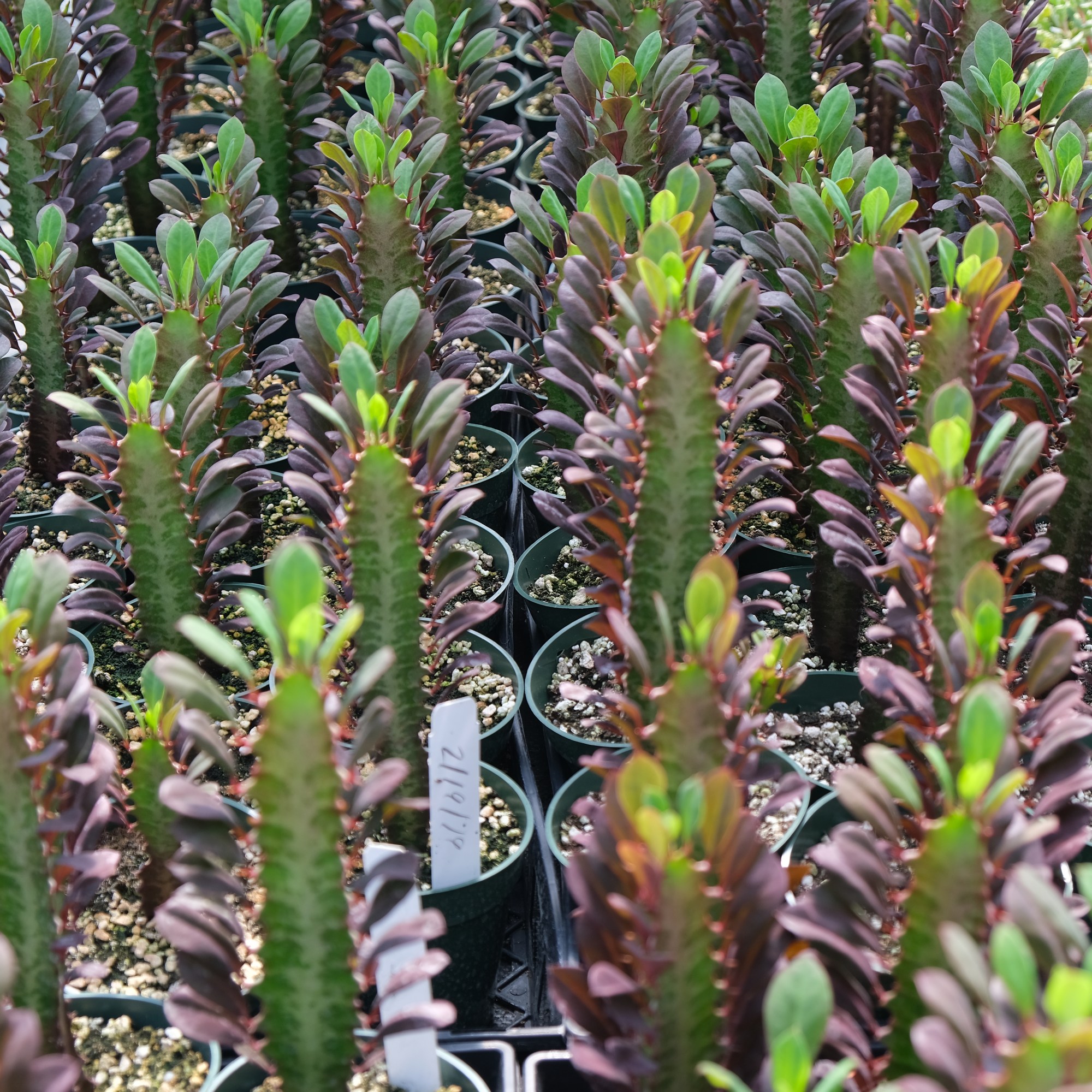
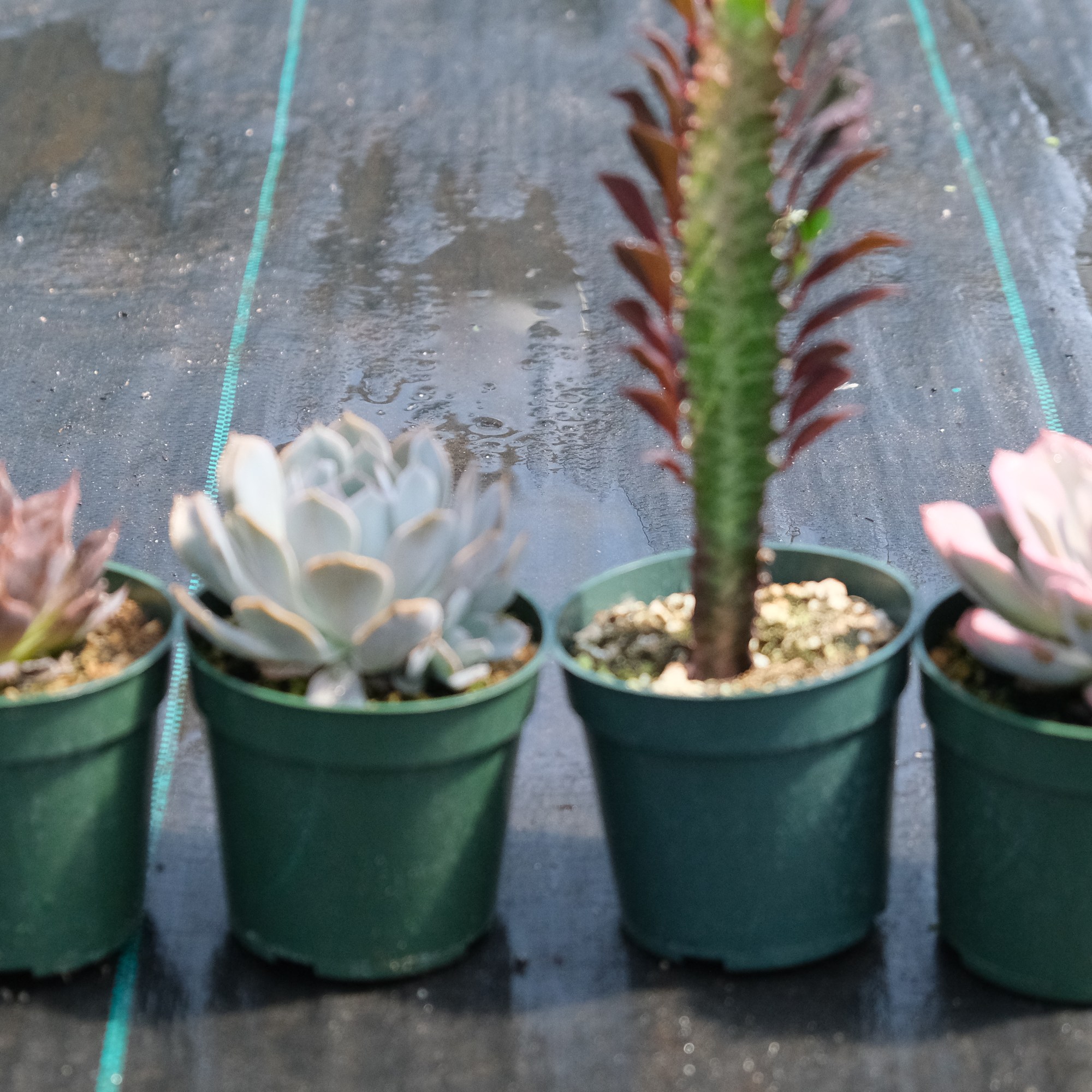
Euphorbia trigona f. rubra – African Milk Tree
Euphorbia trigona f. rubra (African Milk Tree) is a red form of Euphrobia trigona, popular for succulentgardeners who want to add vibrant and unique colors to their landscape. Source: World of Succulents
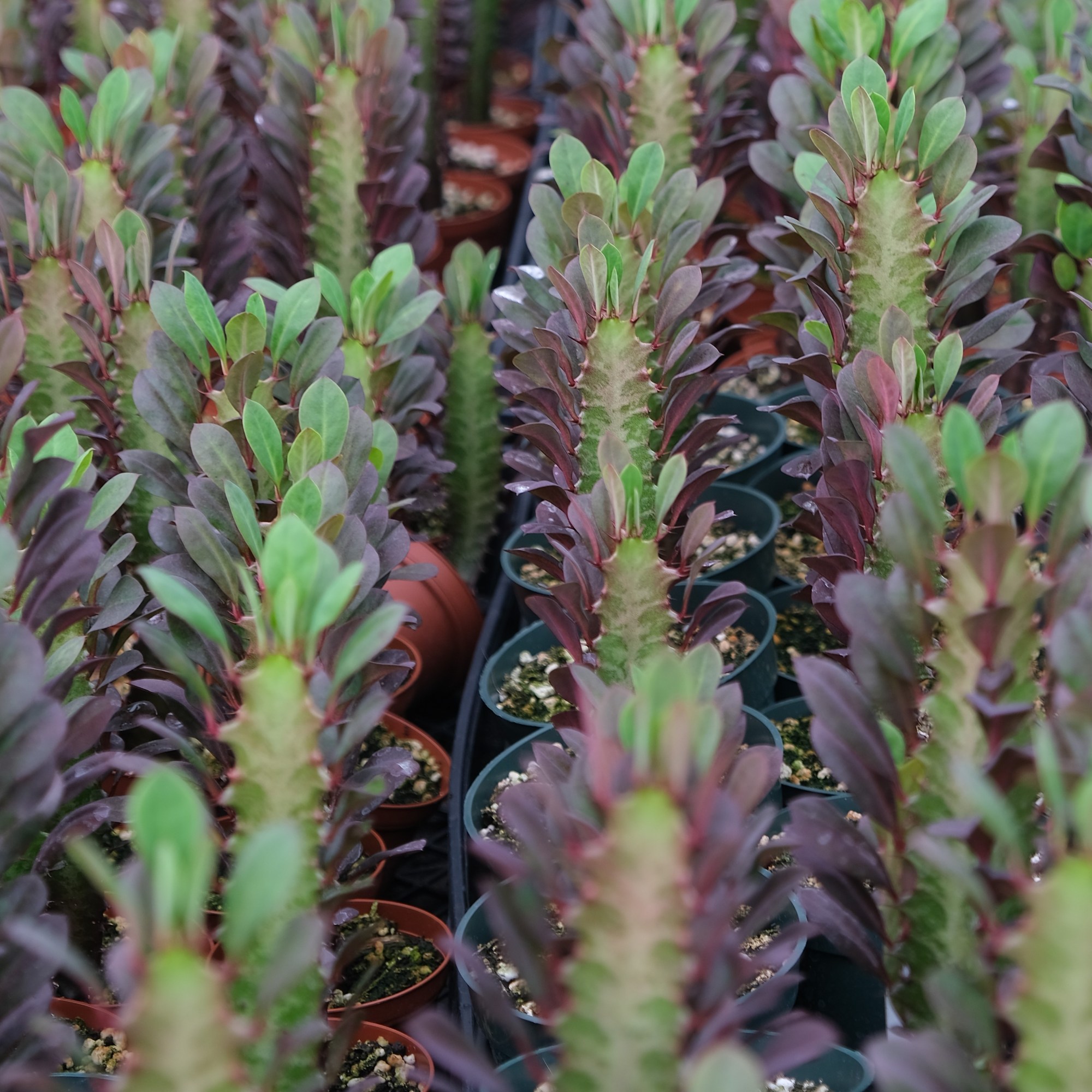
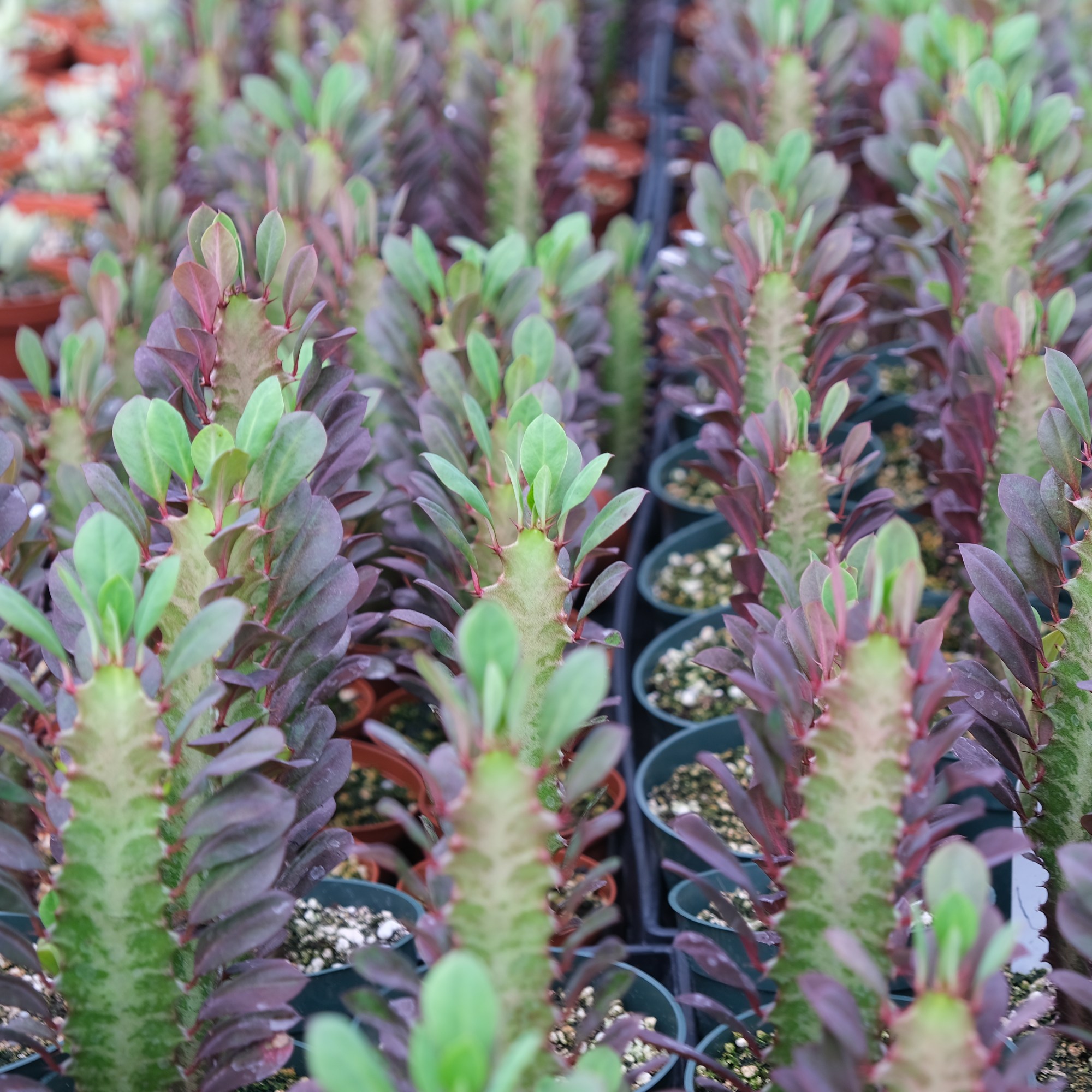
- Just establish, then self sufficient
- Neglect is the key for this plant
- water weekly during the summer
Gasteria bicolor var. liliputana (Dwarf Gasteria)
Gasteria bicolor var. liliputana is a dwarf, succulentperennial with leafy stems up to 4 inches (10 cm) tall. The leaves are dark green, mottled with cream spots, up to 2 inches (5 cm) long and up to 1 inch (2.5 cm) wide. The flowers are small, about 0.8 inch (2 cm), pendulous, tubular to globose, bicolored, reddish-pink and green and look like little stomachs. The inflorescence can be simple or branched and very tall, up to 5 feet (1.5 m) . Source : World of Succulents
- 10a-11b hardy zone
- tolerates more shade than most succulents
- Can be a house plant
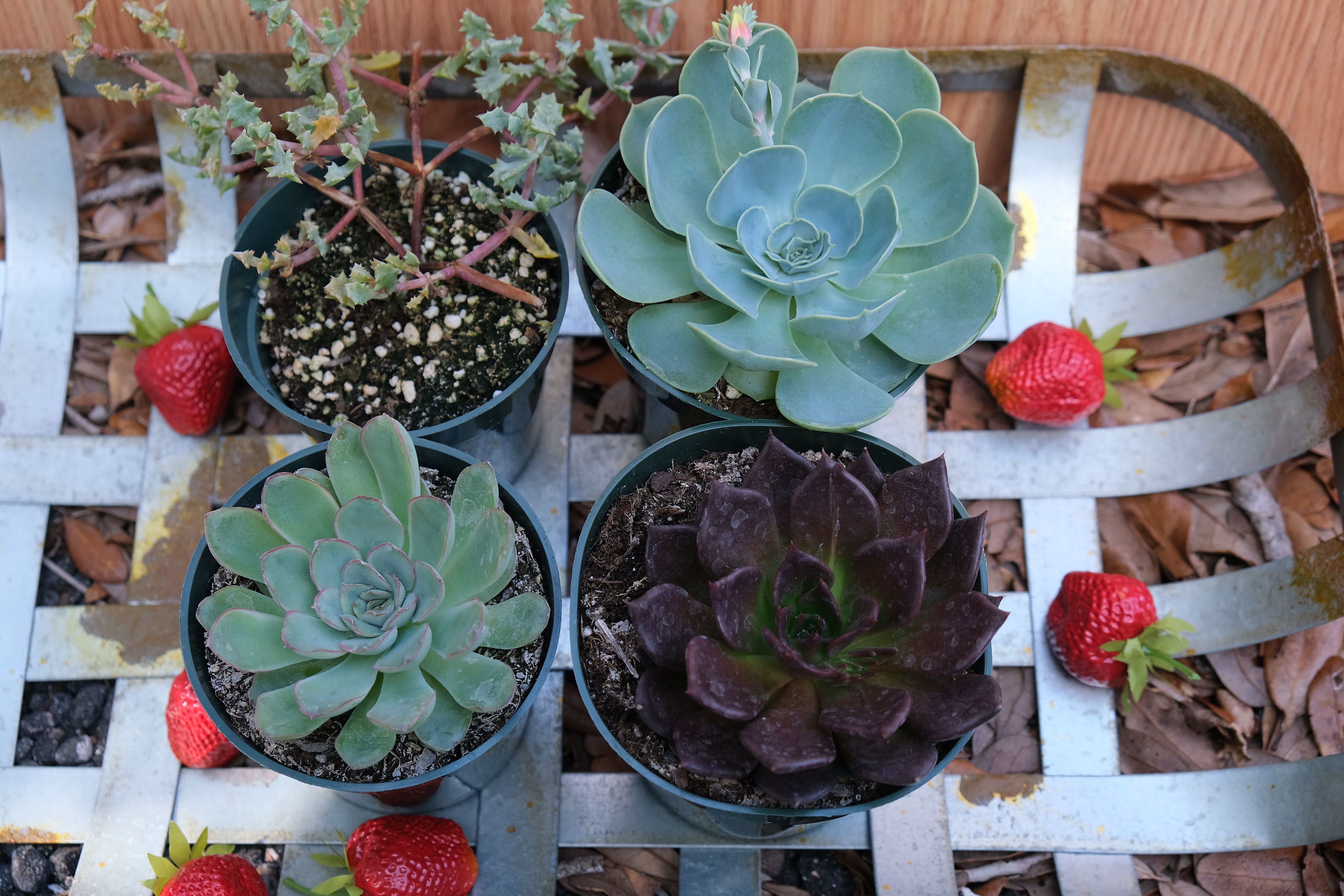
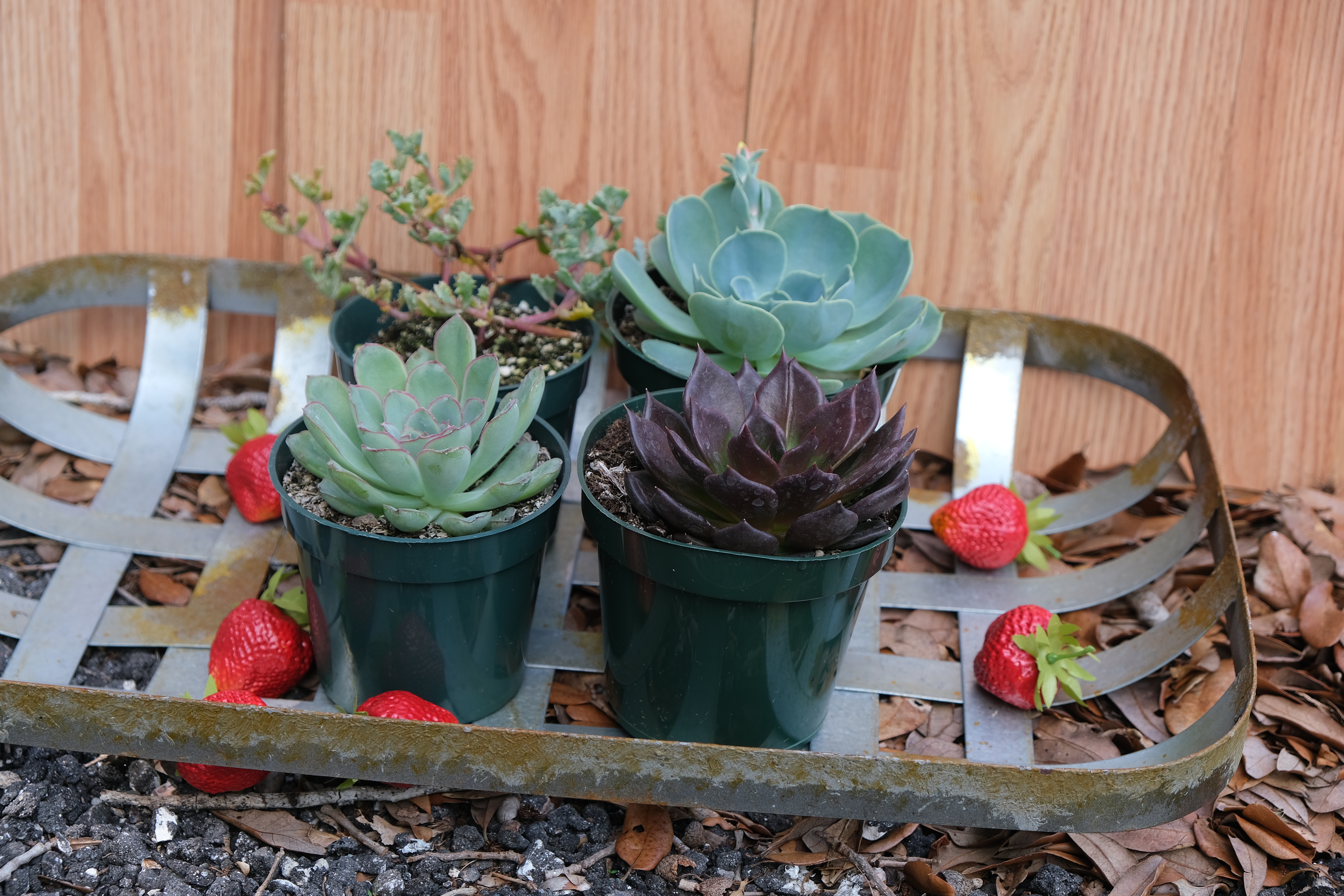
Sempervivum marmoreum
Sempervivum marmoreum is a perennial herb forming basal rosettes up to 2.4 inches (6 cm) in diameter, of succulent leaves. The center of the plant is a vivid green with the lower and upper leaves tipped in a dark plum. Nice sharp contrast giving the plant a tidy appearance. Flowering stalks are erect, succulent, up to 8 inches (20 cm) tall, bearing red flowers with white margins. Each flower is up to 0.8 inch (2 cm) in diameter. Source: World of Succulents
- 4a to 9b hardy zone
- can be houseplant
- easy to grow
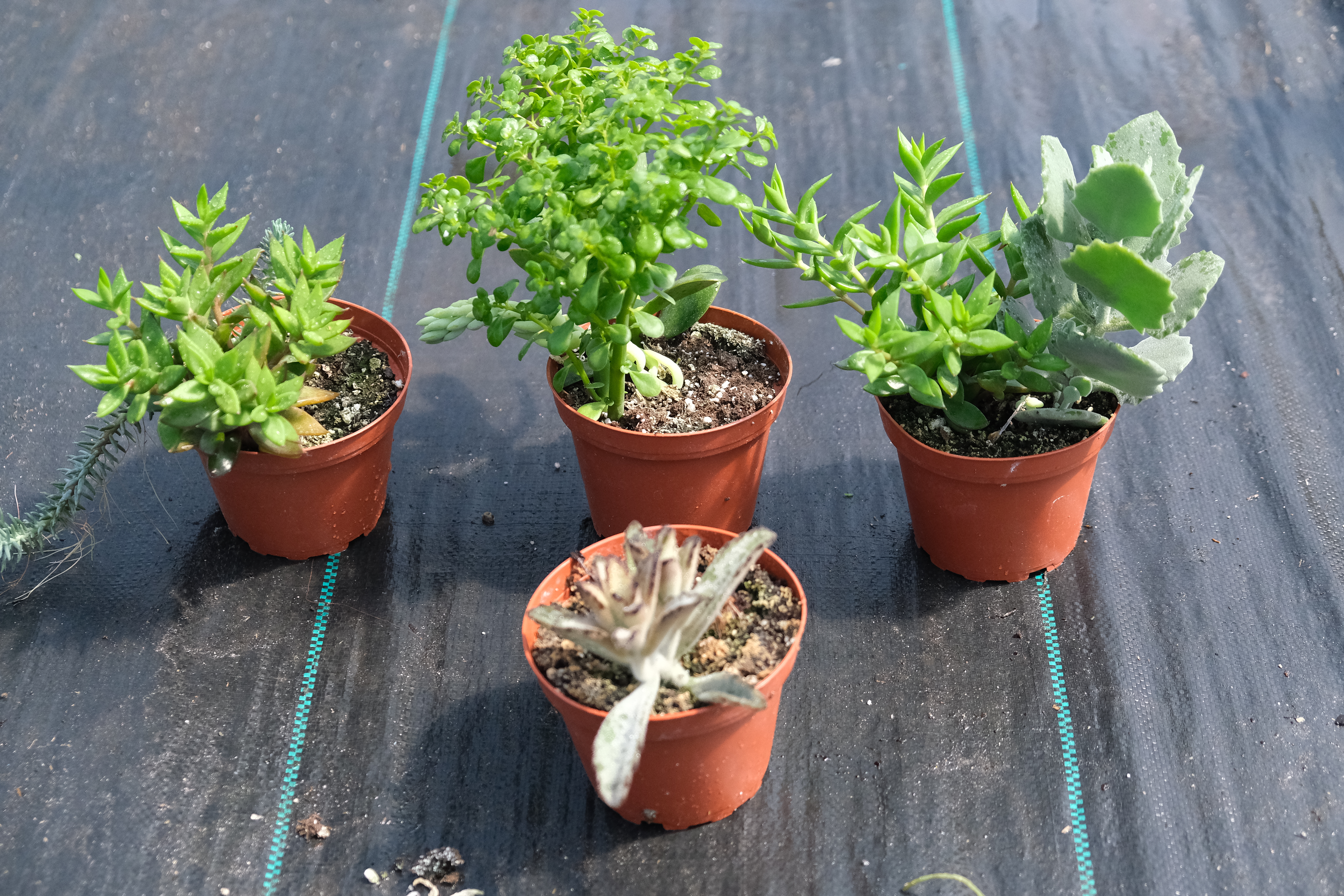
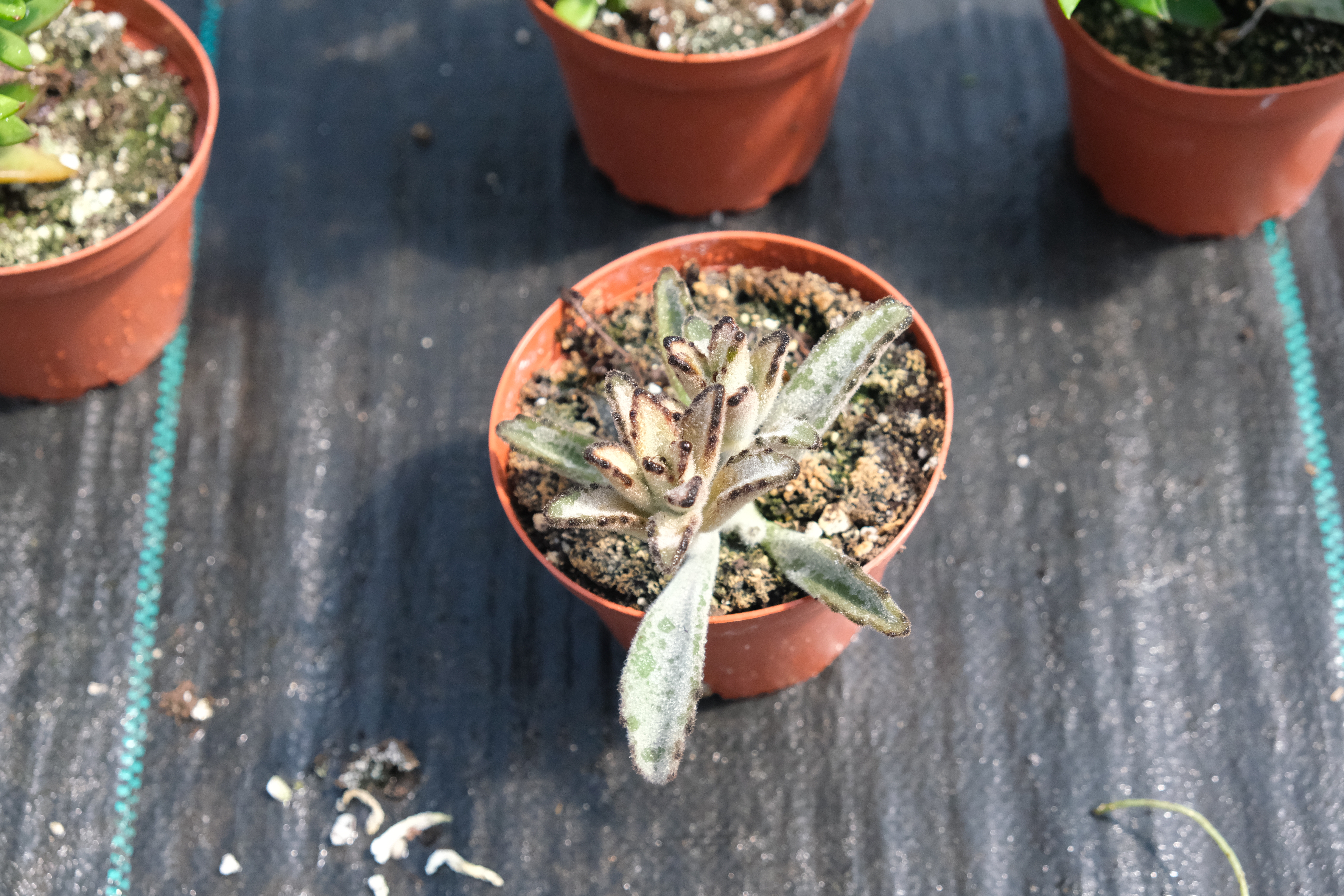
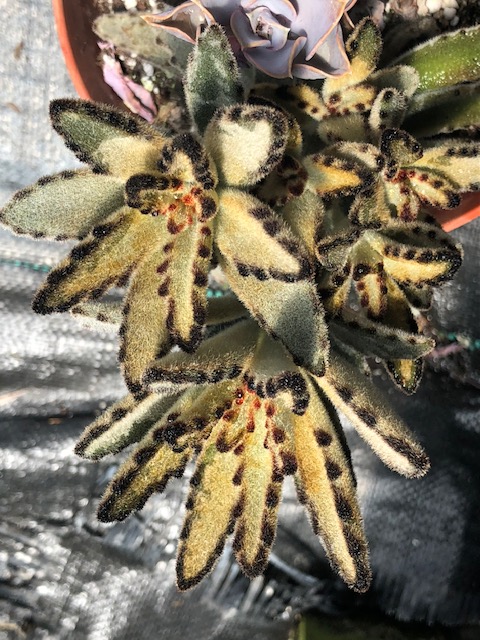
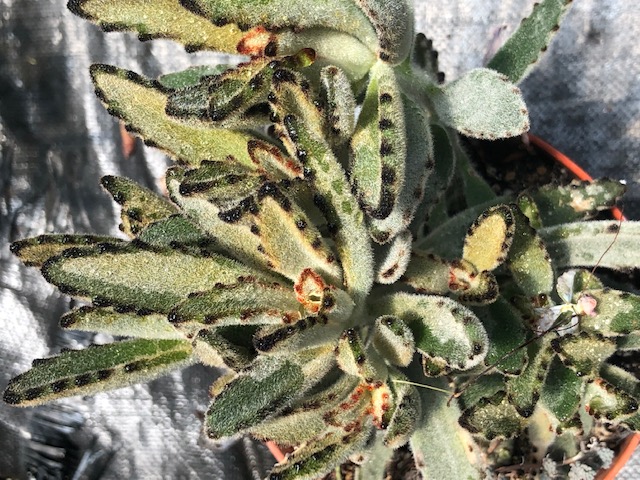
Panda Plant (Kalanchoe tomentosa)
Kalanchoe tomentosa, commonly known as Panda Plant or Pussy Ears, is a hardy succulent that makes an interesting addition to the houseplants you grow indoors. Often a favorite of children, growing Panda Plants are a good specimen to locate in a child’s room as part of the decor.
Panda Plant grows wild on the island of Madagascar. In its native environment, growing Panda Plants have a woody base and reach several feet. As an indoor plant, however, it growth is limited by the size of the container, usually reaching only 1 to 2 feet (30 to 60 cm) in height and 2 feet (60 cm) around. Blooms are rare when growing Panda Plants indoors. Source: World of Succulents
- locate inside Panda Plant by medium to bright light
- does not like hot afternoon sun
- make sure dries completely between waterings.
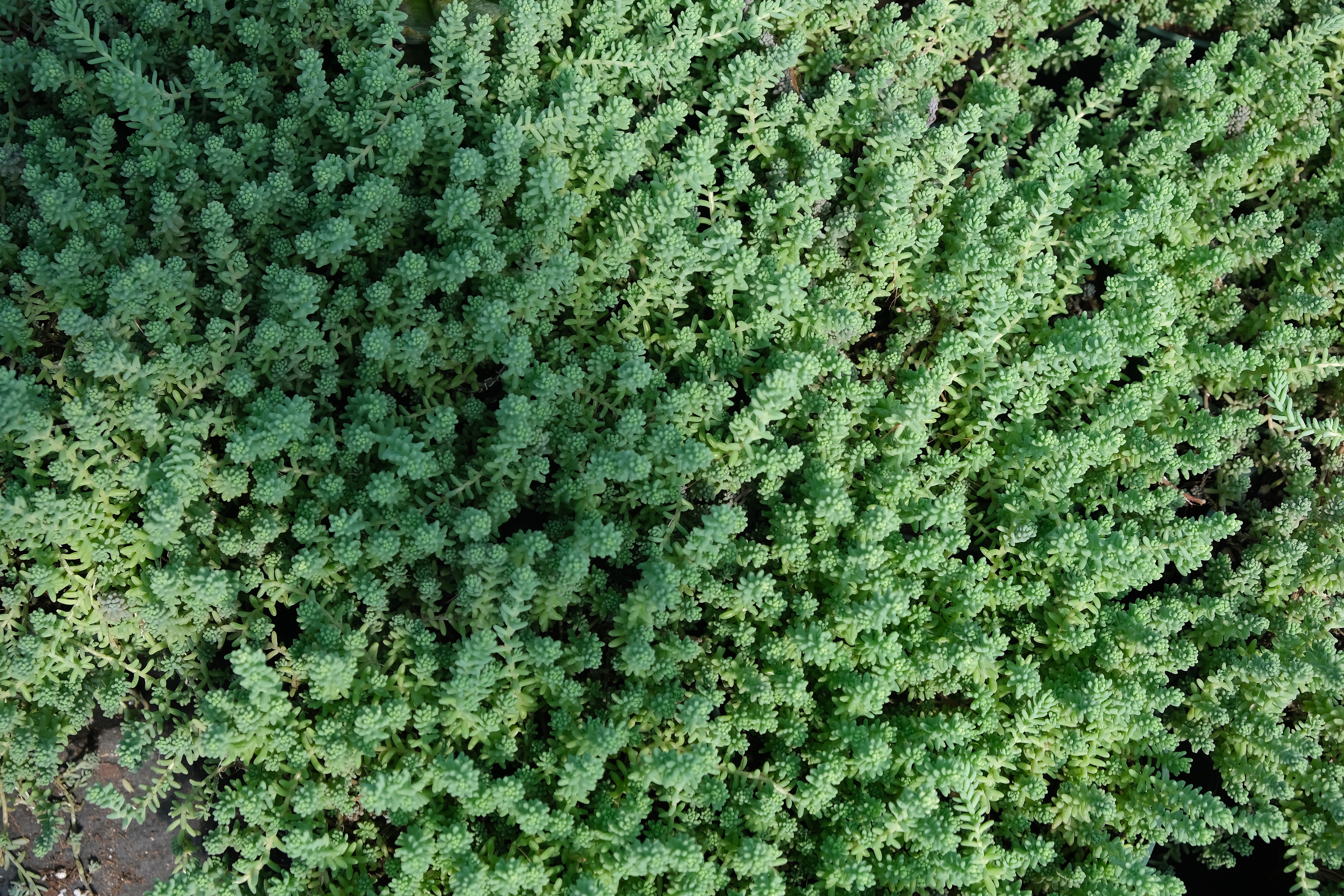
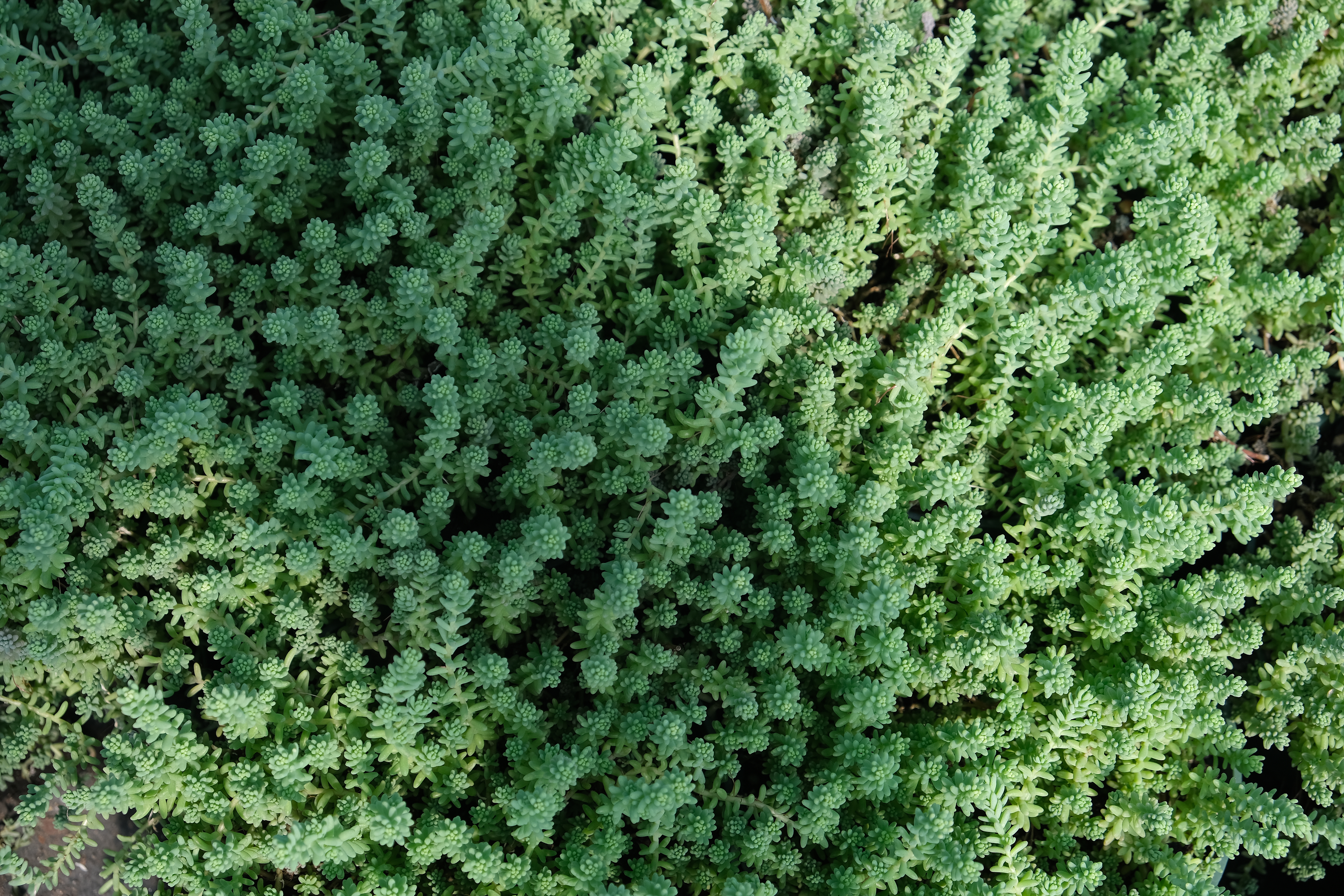
Sedum rupestre ‘Blue Spruce’ – Blue Spruce Stonecrop
Sedum rupestre ‘Blue Spruce’ is a drought tolerant groundcover with small, succulent blue leaves reminiscent of the needles of a blue spruce conifer. In June deep mauve pink stems rise up to 10 inches (25 cm) and are topped with brilliant yellow flowers. It is great for rock walls, green roofs, walkways and containers. Evergreen in warmer zones
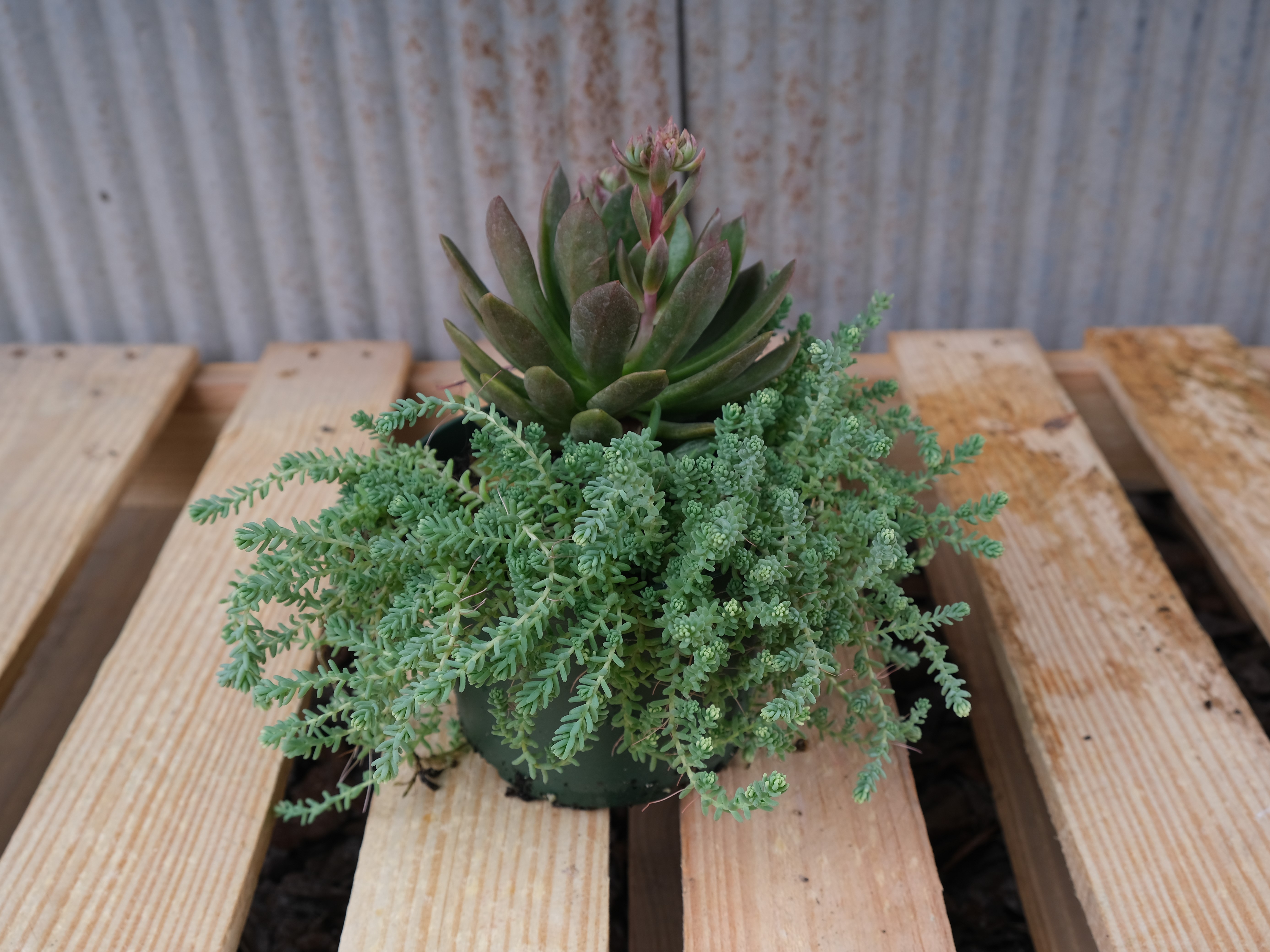
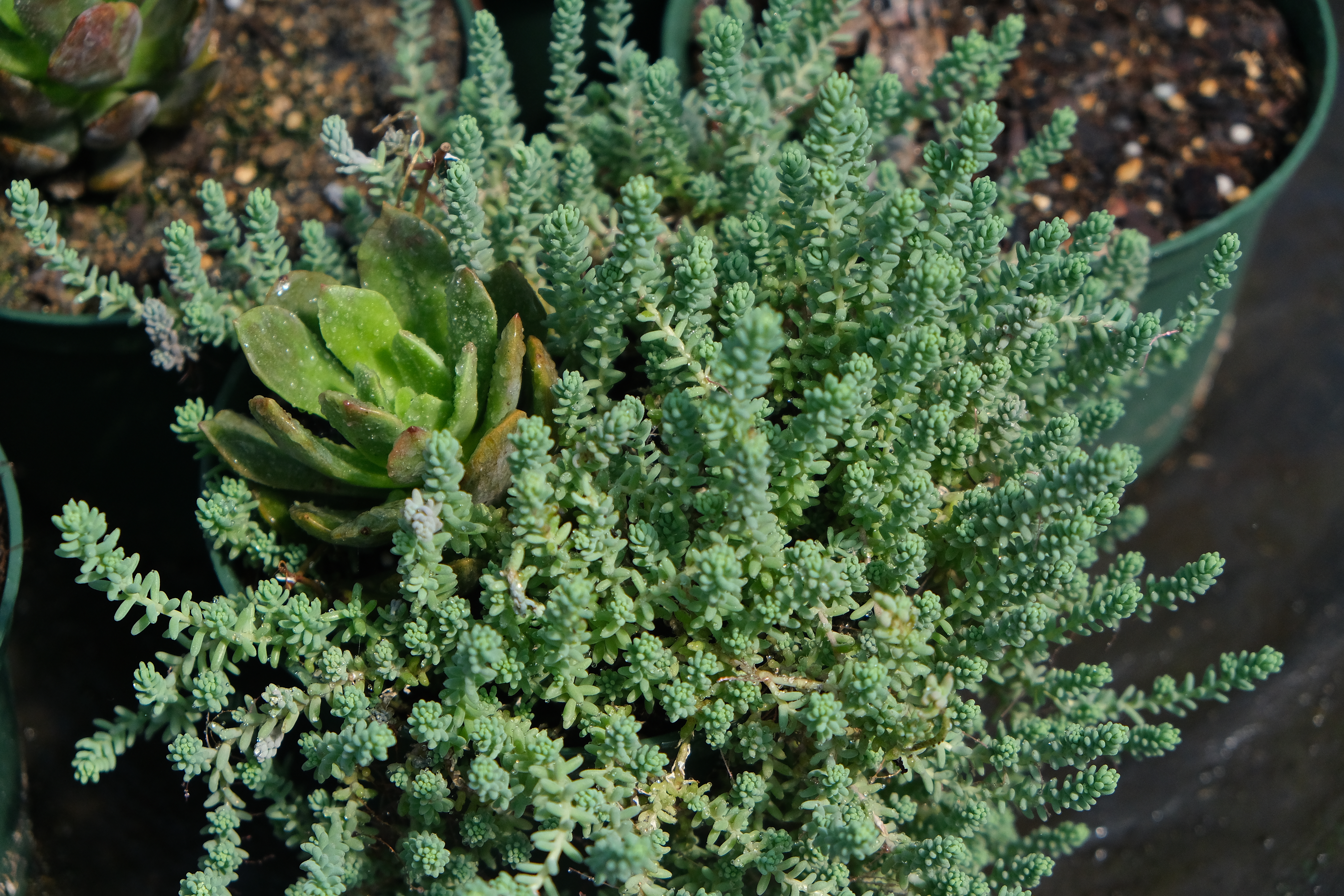
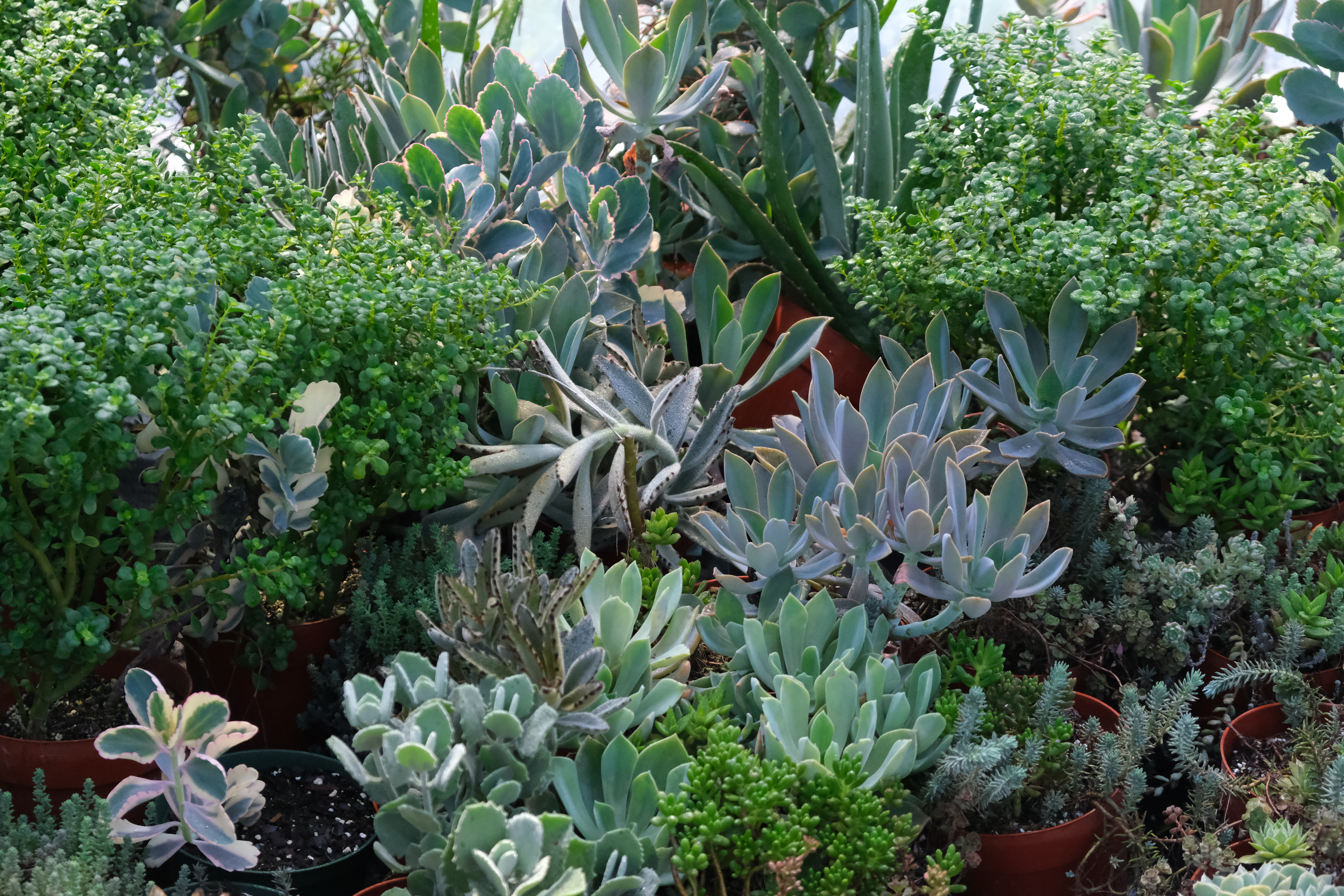
- Can be with other plants or stand alone
- need very little attention
- ideal for the part of your yard that gets little water and lots of sun
- Thrive on neglect
 stresslessplants.com